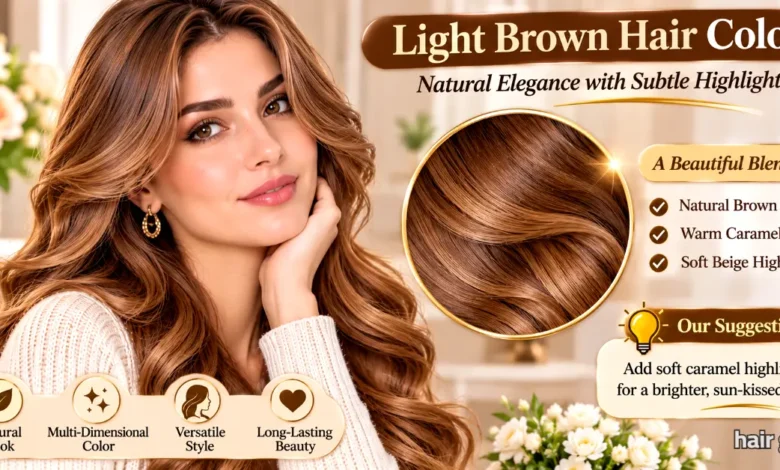
Light Brown Hair Color Best Shades for Every Look
Light brown hair color offers a natural, versatile look, from cool ash and beige to warm golden and caramel shades.
Explore 12 color ideas, learn how to choose a shade for your skin tone and current hair color, and discover practical tips for dyeing, highlights, balayage, and long-lasting color care.
Try the Light Brown Hair Color Finder to discover shade ideas based on your skin tone and current hair color. Use the results for inspiration, not as a guarantee of your final color.
Light Brown Hair Color Finder
Discover your light brown shade. Explore real hair color photos, choose your skin tone, and get personalized color inspiration.
Choose Your Hair Color
Select the shade you would love to try.

Light Golden Brown
A warm, luminous brown with soft golden reflections.
Choose Your Skin Tone
Pick the closest visual match. Your undertone also matters.
Your Current Hair Color
Your starting color can affect the final result.
If your hair has been dyed before, the result may differ from the inspiration photo.
This tool provides general beauty inspiration, not a guarantee of your final hair color. Skin tone alone does not determine the best shade; personal preference, undertone, hair condition, and color history matter too.
What Is Light Brown Hair Color?
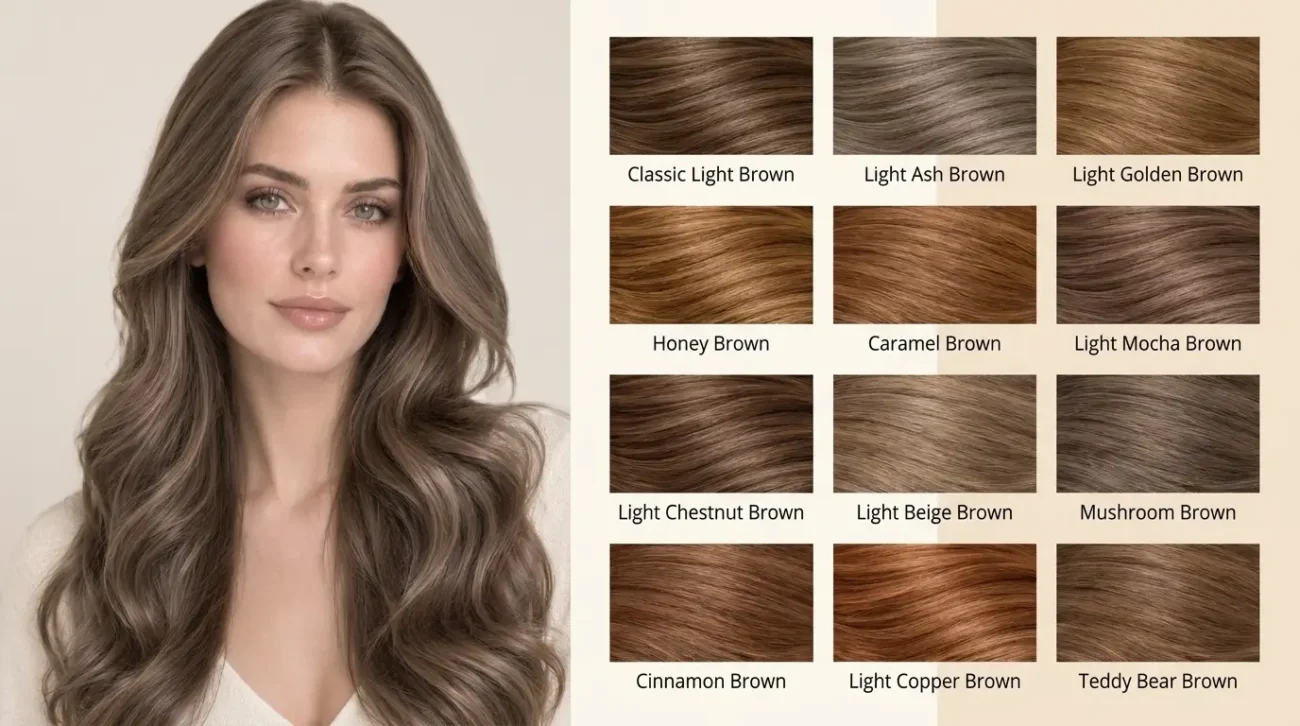
Light brown hair color sits between darker brunette shades and blonde on the hair color spectrum. In many professional color systems, it is associated with levels 5 and 6, although numbering conventions vary between brands.
What makes this color family especially versatile is its range of undertones. Depending on the formula, light brown can appear golden, honeyed, ashy, beige, neutral, reddish, or softly caramel-toned.
Popular variations include:
- Classic light brown
- Light ash brown
- Light golden brown
- Honey brown
- Caramel brown
- Light mocha brown
- Light chestnut brown
- Light beige brown
- Mushroom brown
- Cinnamon brown
- Light copper brown
- Teddy bear brown
These names describe general color families rather than universal formulas. As a result, two products with similar names may produce different finishes.
Your starting color, hair porosity, previous treatments, lighting, and the product formula all affect the final appearance. For that reason, compare actual shade charts and reference photographs rather than relying on the name alone.
Understanding Hair Color Levels Before Choosing a Shade
Hair color levels describe how light or dark a color appears. Undertones, meanwhile, describe whether it looks warm, cool, or neutral.
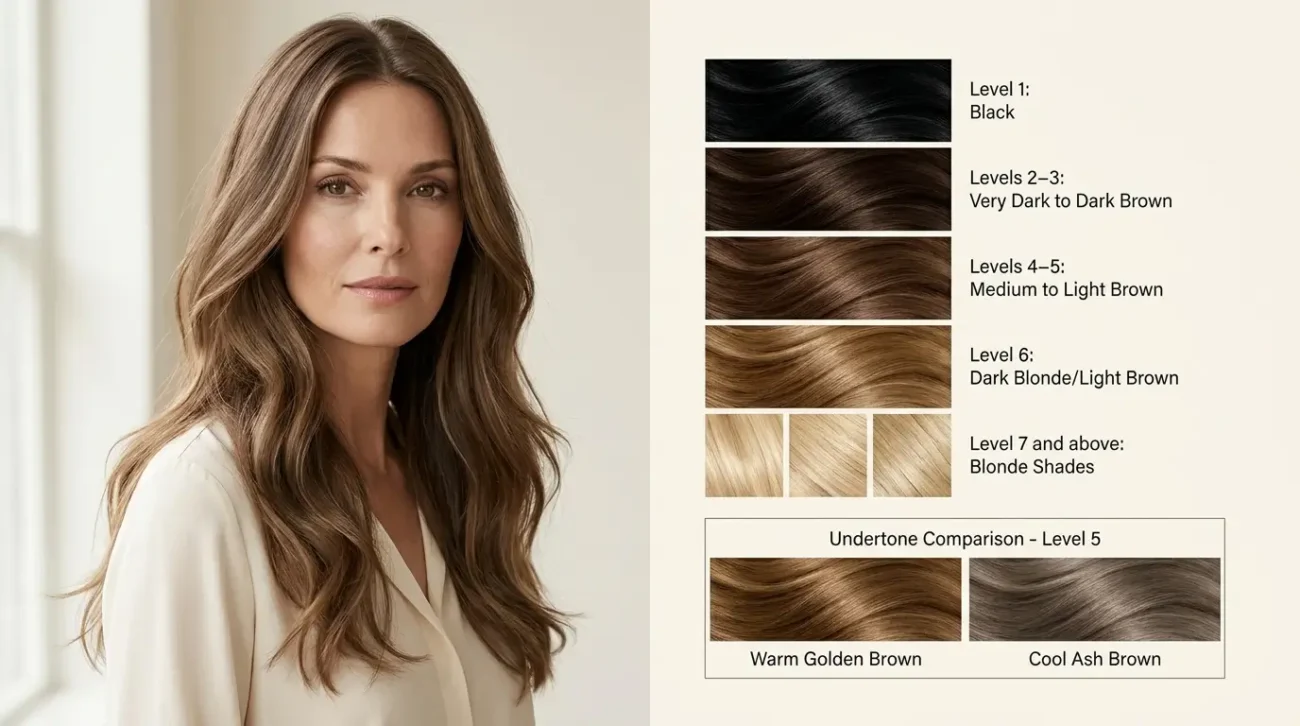
| Approximate level | General appearance | What to consider |
|---|---|---|
| Level 1 | Black | A dark starting point for significant color changes |
| Levels 2–3 | Very dark to dark brown | Lighter results may require controlled lightening |
| Levels 4–5 | Medium to light brown | Often close to the brunette color family |
| Level 6 | Dark blonde or light brown, depending on the system | May be relevant when selecting a lighter brunette shade |
| Level 7 and above | Blonde shades | Generally lighter than classic light brown |
This table is a simplified reference, not a universal chart. Always check the numbering system used by the specific manufacturer.
It is equally important to distinguish level from tone. For example, two level 5 shades can look very different if one has golden reflections and the other has cool, ashy undertones.
12 Light Brown Hair Color Shades to Consider
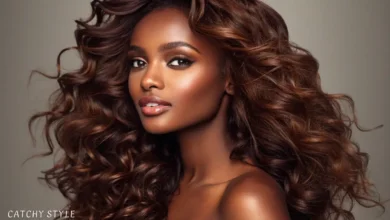
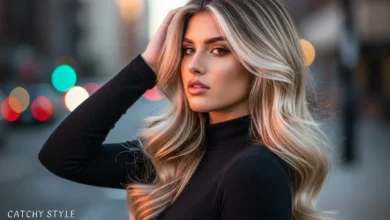
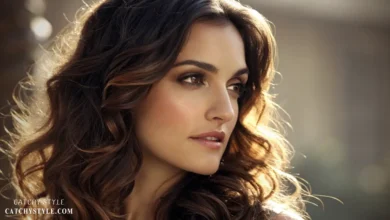
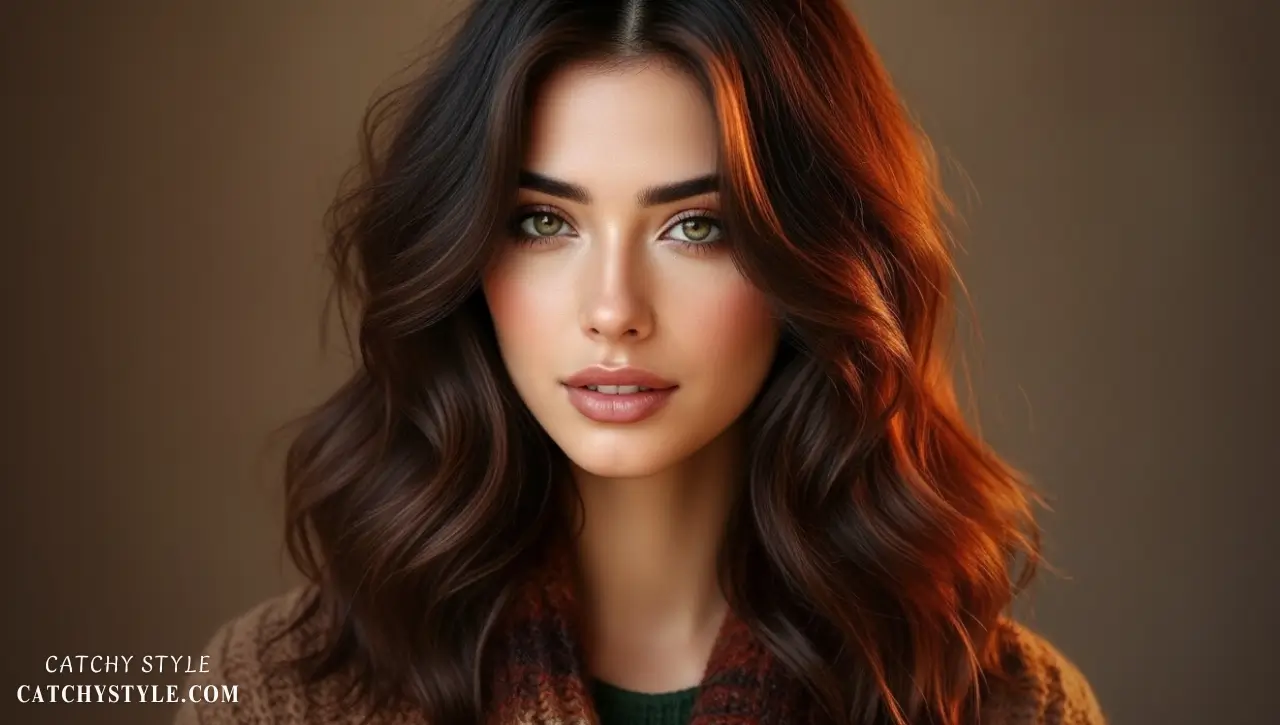
Light brown hair color comes in a variety of tones, from cool ash and beige to warm honey and caramel.
These 12 shade ideas will help you compare different looks and find an option that suits your skin tone, starting hair color, and personal style.
1. Classic Light Brown
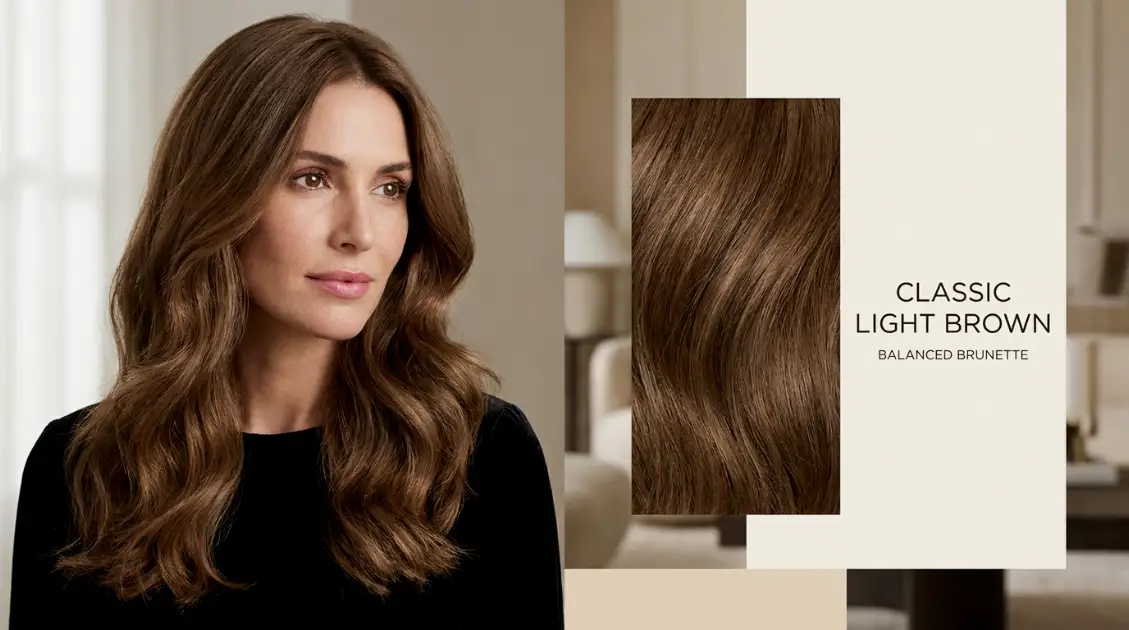
Classic light brown is a balanced brunette shade for anyone who wants a natural-looking change without moving too far toward blonde.
It can look understated and polished when the shade is close to your natural color. In addition, subtle highlights or slightly deeper lowlights can add dimension without dramatically changing the overall appearance.
Choose this shade family if you prefer a versatile brunette look rather than a strong golden, red, or ash effect.
Best for: A timeless brunette appearance, subtle color changes, and a relatively natural-looking finish.
2. Light Ash Brown
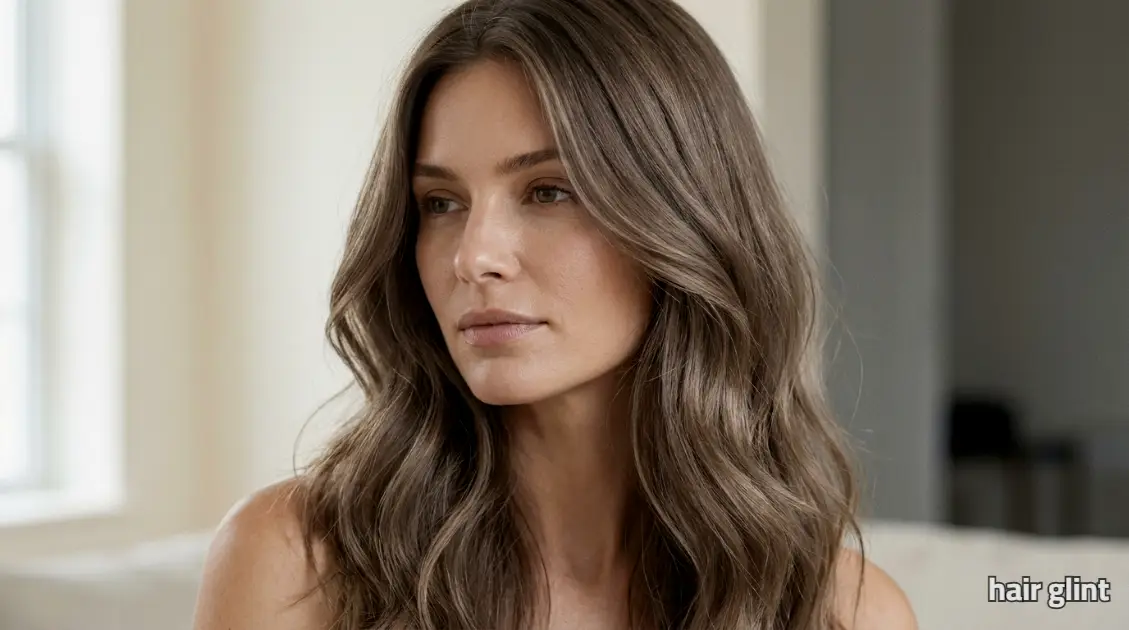
Light ash brown features cool, muted undertones. It is worth considering if you prefer a brunette shade that looks less golden or warm.
Ash tones may help neutralize certain unwanted warm reflections when the underlying color and formula are appropriate. However, ash dye alone cannot reliably correct every orange or red result.
If your hair has previously been dyed dark or has strong underlying warmth, professional color assessment may be necessary before making a significant change.
Best for: Those who prefer a cooler brunette finish with less visible golden warmth.
3. Light Golden Brown
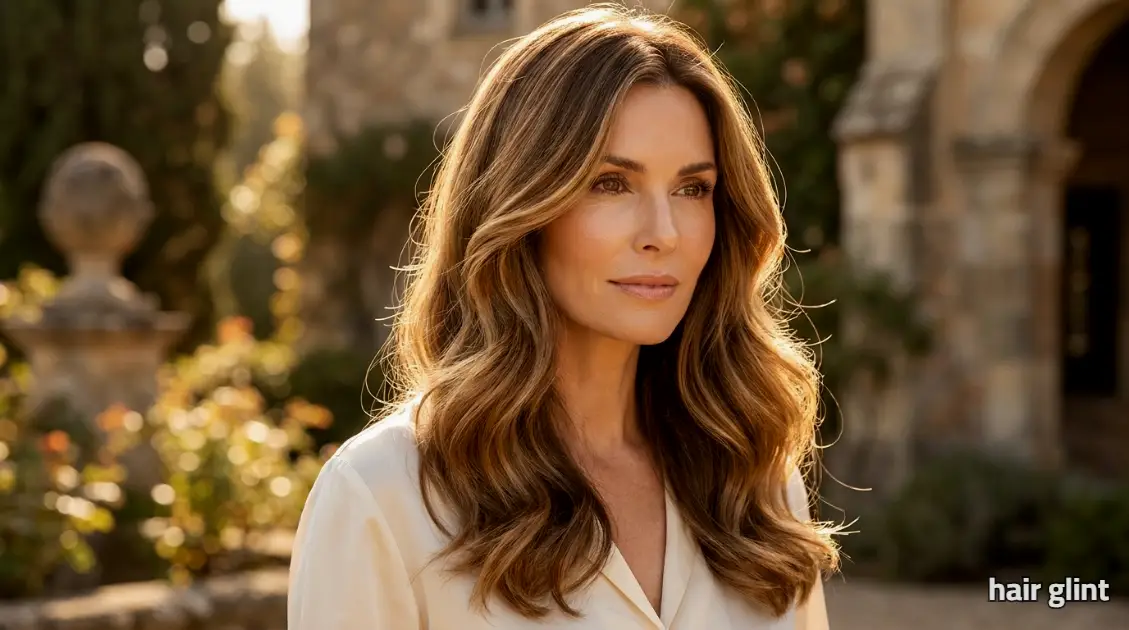
Light golden brown combines a brown base with soft golden reflections. In natural light, these reflections can make the color appear brighter and warmer without losing its brunette character.
For extra dimension, consider fine honey highlights or a few lighter pieces around the face. However, if you prefer a more subtle result, a balanced golden formula may be better than an intensely yellow finish.
Best for: People who enjoy warm, luminous brunette shades.
4. Honey Brown
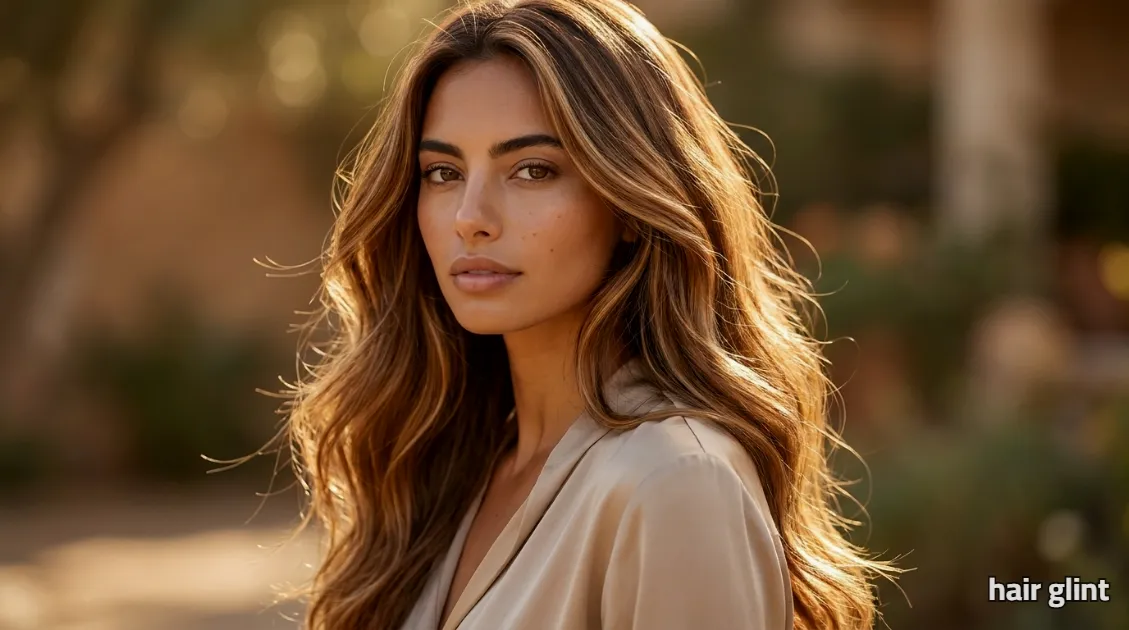
Honey brown blends light brown with golden or amber tones. It creates a warm appearance that can look especially dimensional when combined with carefully placed highlights.
You can wear honey brown as an all-over color or introduce it through selected sections. The second option may be useful if you want more movement while retaining a darker root area.
Because honey shades vary in warmth and brightness, bring reference photos to your colorist to communicate the finish you prefer.
Best for: A soft, golden look with visible warmth and dimension.
5. Caramel Brown
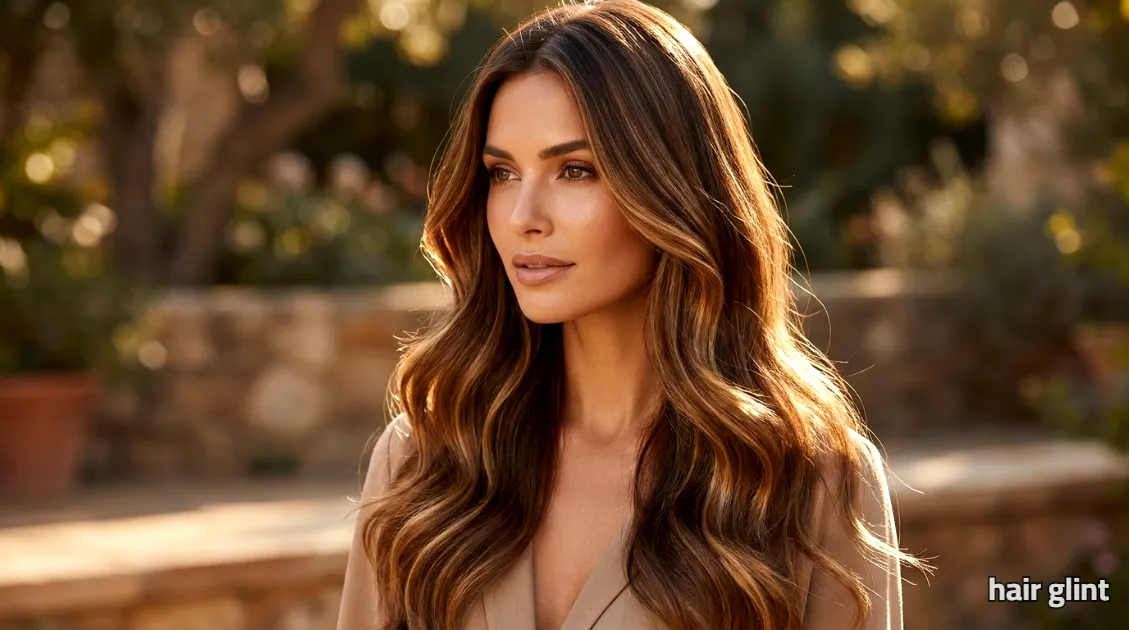
Caramel brown features rich golden-brown or amber reflections. Compared with a neutral brunette, it can create a warmer, more sunlit appearance.
Rather than applying one uniform shade, a colorist can place caramel highlights through selected sections of the hair. This approach creates depth and movement while keeping the overall look brunette.
Caramel balayage is another option if you prefer lighter mid-lengths and ends. Nevertheless, achieving noticeably lighter pieces may require a lightener, depending on your starting color.
Best for: Warm brunette color, dimensional highlights, and softly blended lighter sections.
6. Light Mocha Brown
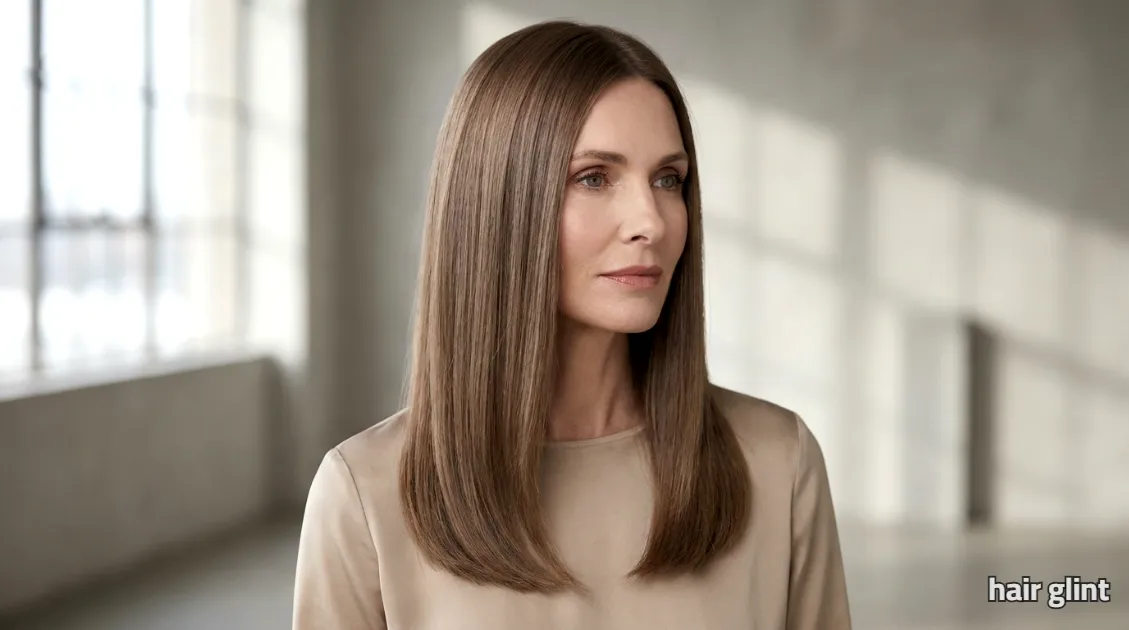
Light mocha brown is a soft brunette option that can range from neutral to warm or cool, depending on the formula.
It is useful if you want a polished brown shade without strong golden or copper reflections. Furthermore, mocha can work as an all-over color or as part of a dimensional brunette look.
Since mocha is not a standardized color name, compare actual swatches and ask how the selected formula is expected to appear on your current hair.
Best for: A balanced, understated brunette finish.
7. Light Chestnut Brown
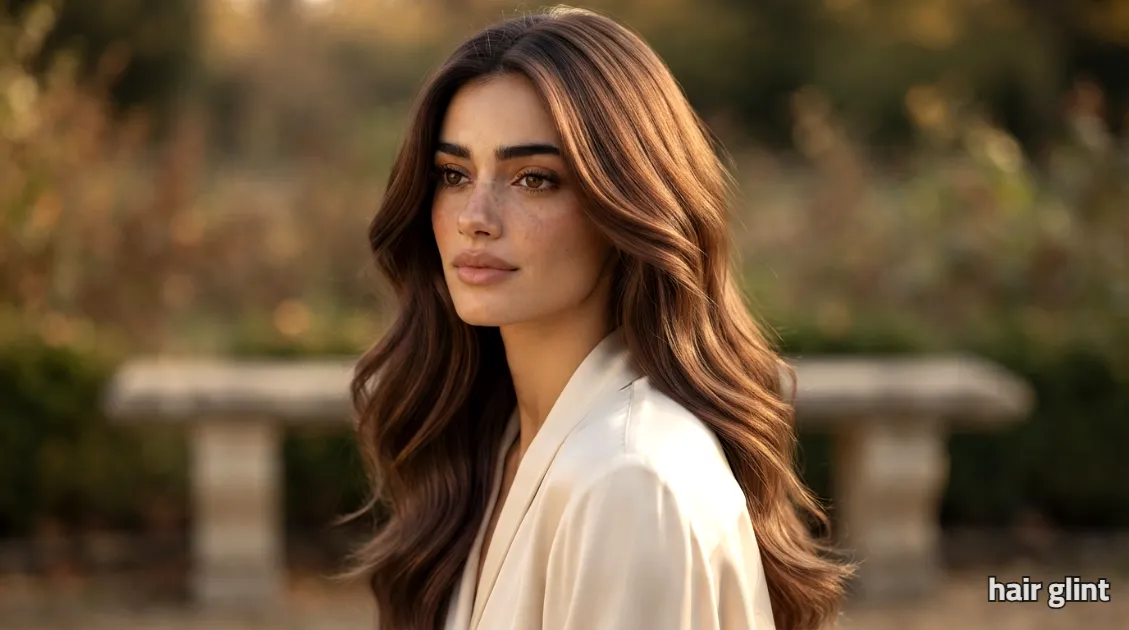
Light chestnut brown contains subtle reddish warmth. These reflections can make brunette hair look richer, particularly when the red tones remain soft rather than intensely coppery.
If your hair naturally shows reddish reflections in sunlight, chestnut may complement that characteristic. On the other hand, if you prefer to avoid red tones, a neutral or cool brown may be a better starting point.
Best for: Those who like a warm brunette shade with gentle red reflections.
8. Light Beige Brown
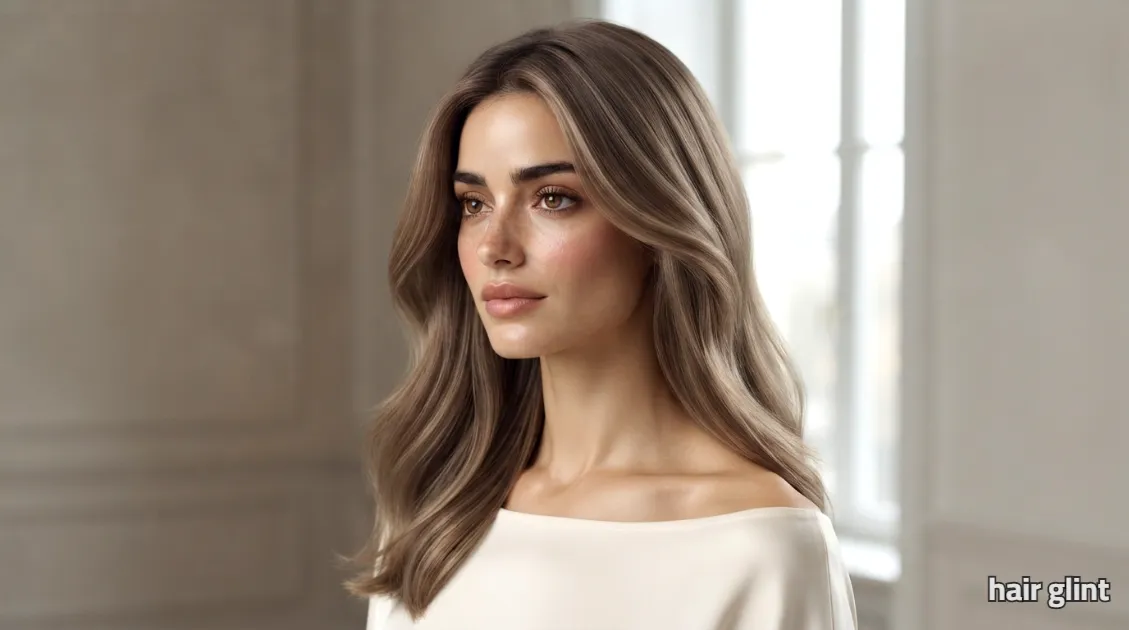
Light beige brown belongs to a softer, more muted color family. Depending on the formula, it may balance golden and ashy reflections to create a neutral-looking finish.
This shade can appeal to anyone who wants a modern brunette color without pronounced golden warmth or an obviously cool result.
Beige brown can also work beautifully in highlights and blended balayage. However, the final tone depends on the underlying hair color and the products used to achieve it.
Best for: A soft, balanced brunette appearance with restrained warmth.
9. Mushroom Brown
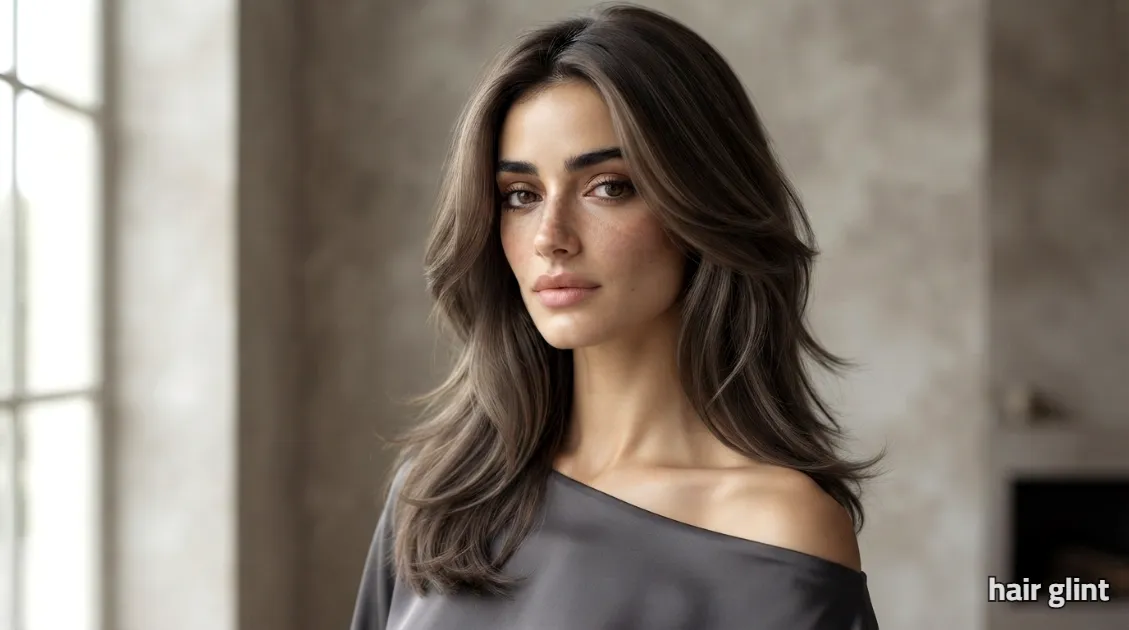
Mushroom brown usually refers to a muted, cool-toned brunette inspired by taupe and earthy brown shades.
Rather than looking strongly golden or coppery, it generally has a subdued finish. Colorists may create it by combining different brunette tones and lighter pieces, so the result can vary considerably.
If you want a mushroom-inspired look, bring photographs showing the exact balance of brown, beige, and cool tones you prefer.
Best for: People who like earthy, muted, cool-toned brunette colors.
10. Cinnamon Brown
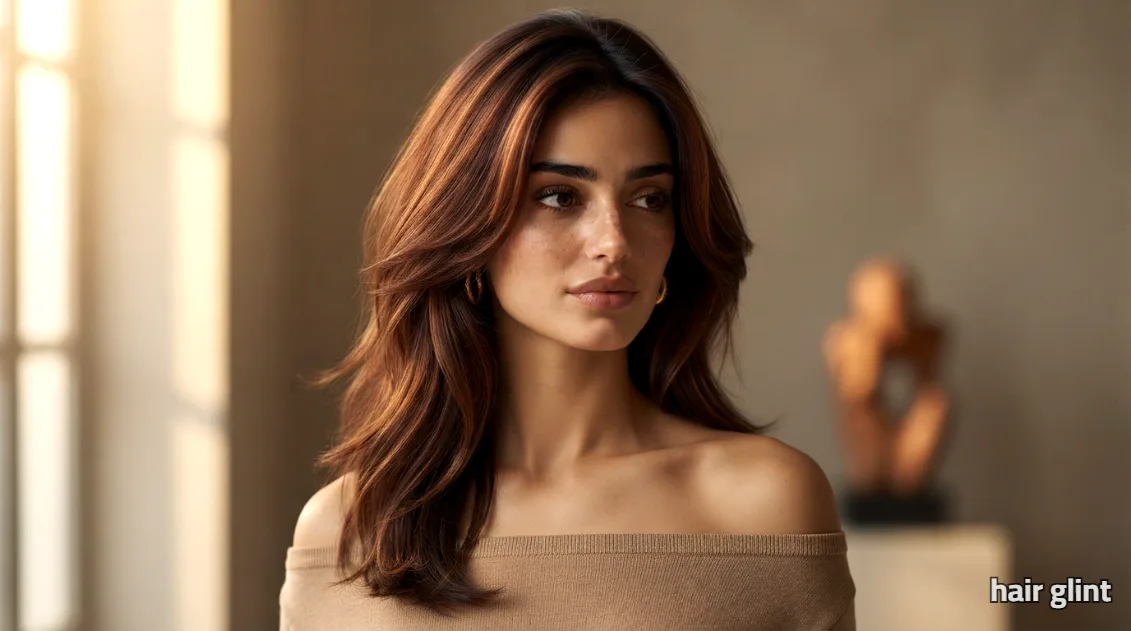
Cinnamon brown combines brunette depth with warm reddish or copper reflections. It offers a more noticeable warm finish than mocha while remaining within the brown color family.
For a subtle result, ask for restrained cinnamon tones. Alternatively, a stronger copper influence can create a more distinctive look.
Because warm reflections can change as the color fades, discuss maintenance and color-refresh options before choosing this shade.
Best for: A warm brunette look with a hint of spice and red.
11. Light Copper Brown
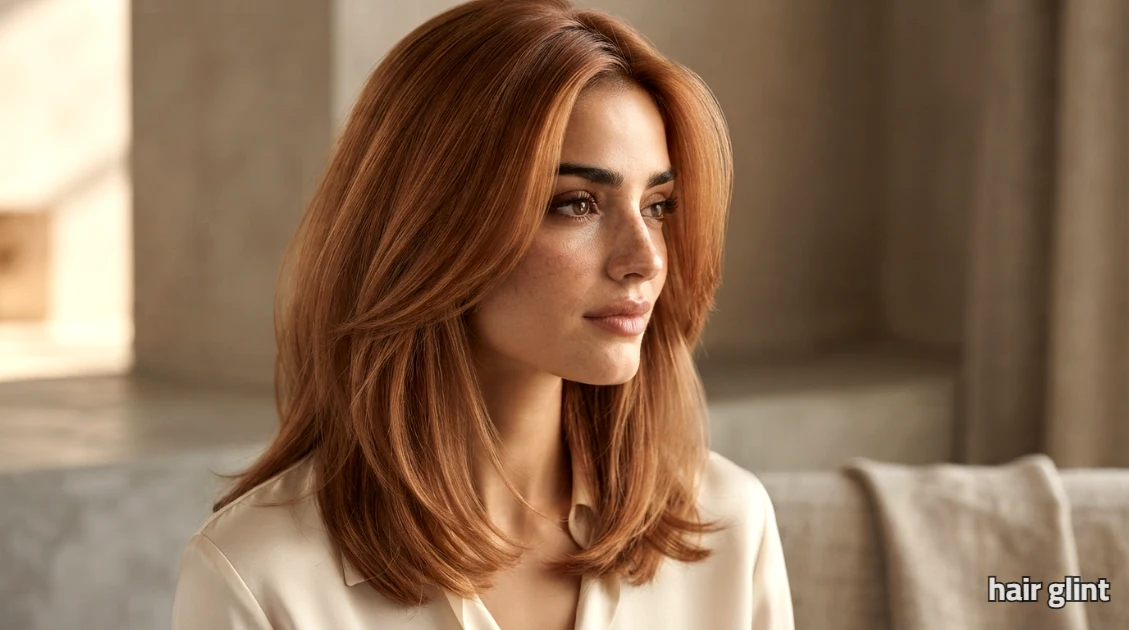
Light copper brown introduces noticeable copper or ginger reflections into a brown base.
It can be an appealing choice if you enjoy warm colors and want something more distinctive than classic light brown. Depending on the formula, the copper effect may appear subtle or quite vivid.
Before choosing it, consider your starting color and how much maintenance you are comfortable with. Copper tones can become less noticeable as the color fades, so a suitable refresh routine may be necessary.
Best for: Those who enjoy copper warmth and a more expressive brunette shade.
12. Teddy Bear Brown
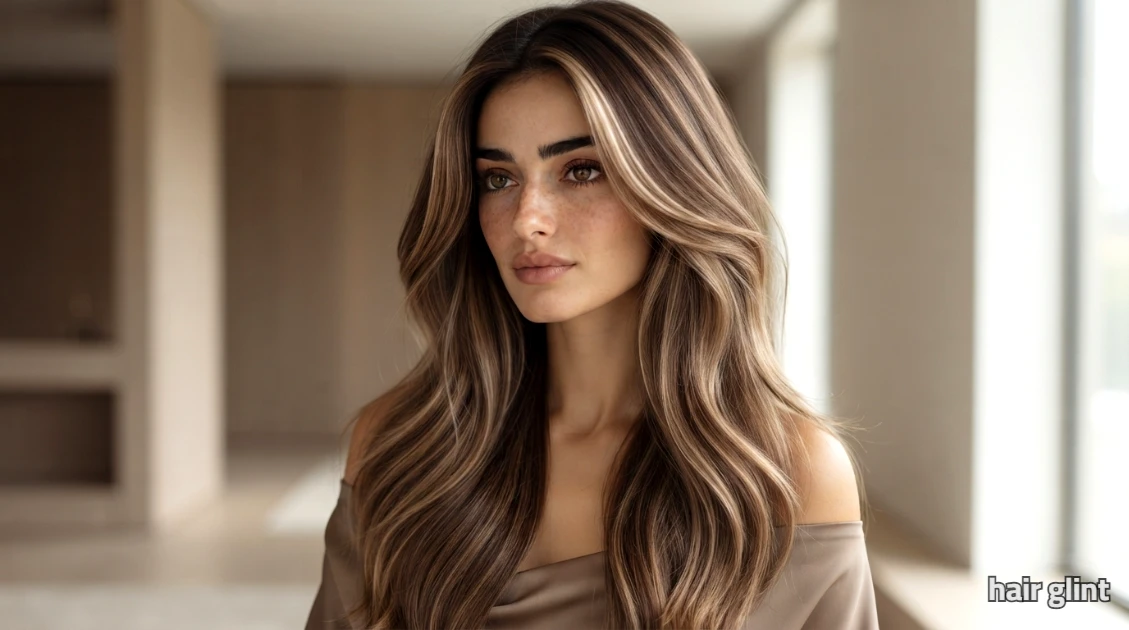
Teddy bear brown is a descriptive salon trend rather than a universal formula. It generally refers to a soft, dimensional brunette with blended brown and blonde or beige highlights.
The aim is a creamy, multi-tonal appearance instead of a flat, single shade. Depending on the desired result, a colorist may combine a brunette base with fine highlights and carefully blended lighter sections.
Because the name can describe several different finishes, photographs are particularly useful when requesting this look.
Best for: A soft, dimensional brunette with blended lighter tones.
Light Brown Hair Color Shade Comparison
If you are unsure which shade to choose, compare the general tone and visual effect before making a decision.
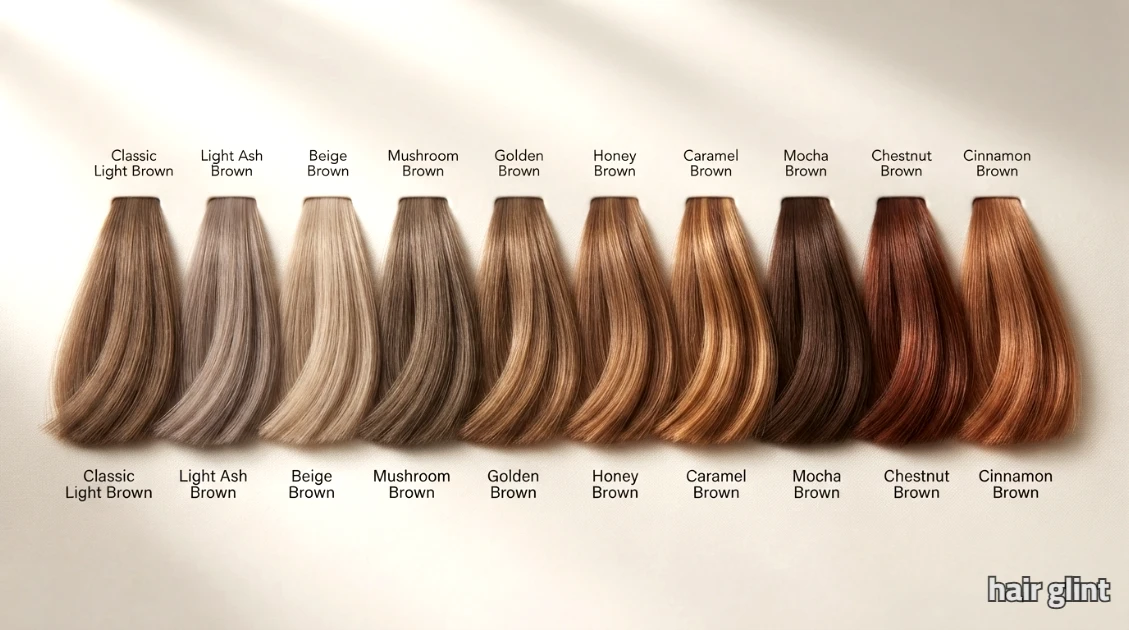
| Shade | General tone | Typical visual effect |
|---|---|---|
| Classic light brown | Depends on the formula | Natural-looking brunette |
| Light ash brown | Cool | Muted, less golden appearance |
| Golden brown | Warm | Golden reflections and brightness |
| Honey brown | Warm | Soft amber-gold dimension |
| Caramel brown | Warm | Rich, sunlit ribbons |
| Mocha brown | Neutral to variable | Soft, polished brunette |
| Chestnut brown | Warm or reddish | Rich brown with red reflections |
| Beige brown | Neutral or muted | Soft, understated finish |
| Mushroom brown | Usually cool | Earthy, taupe-inspired brunette |
| Cinnamon brown | Warm or coppery | Spiced, reddish warmth |
These descriptions are general guides. The product’s shade number, actual swatch, starting hair color, and formulation provide more useful information than the marketing name alone.
Light Brown Hair Color With Highlights
Light brown hair with highlights creates contrast and dimension without requiring every strand to be the same color. Depending on the placement and brightness, highlights can look subtle and natural or more noticeable.
Caramel Highlights
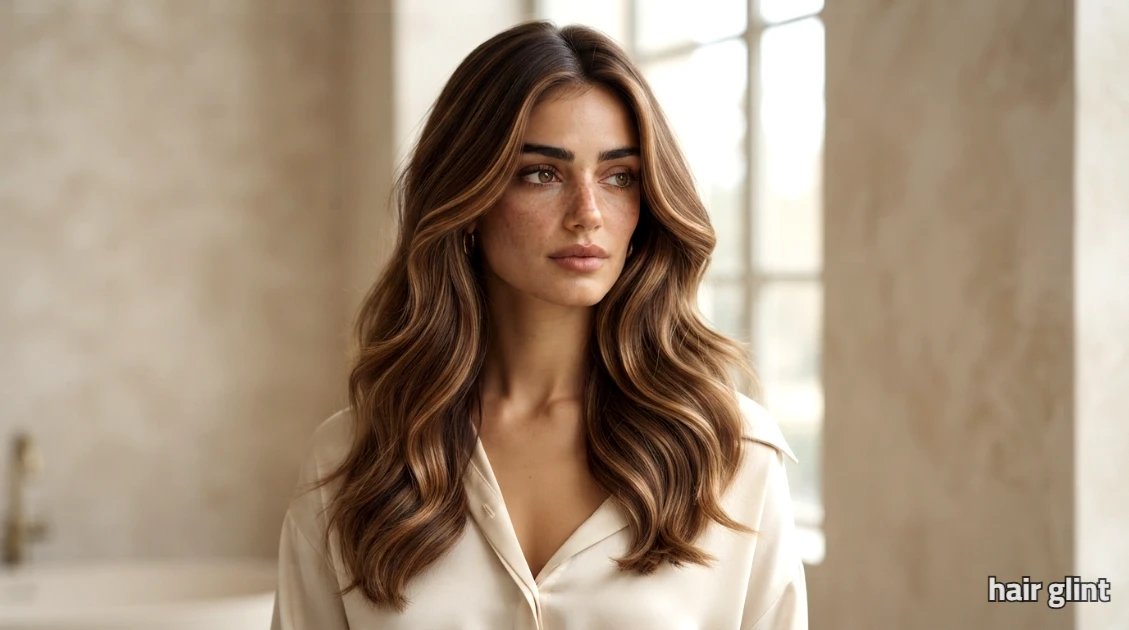
Caramel highlights add warm contrast to a light or medium brown base. They can be placed through the mid-lengths and ends to create a soft, sunlit appearance.
If you prefer less noticeable regrowth, ask your stylist about a blended root area. The placement and contrast should reflect your preferred maintenance routine.
Honey Highlights
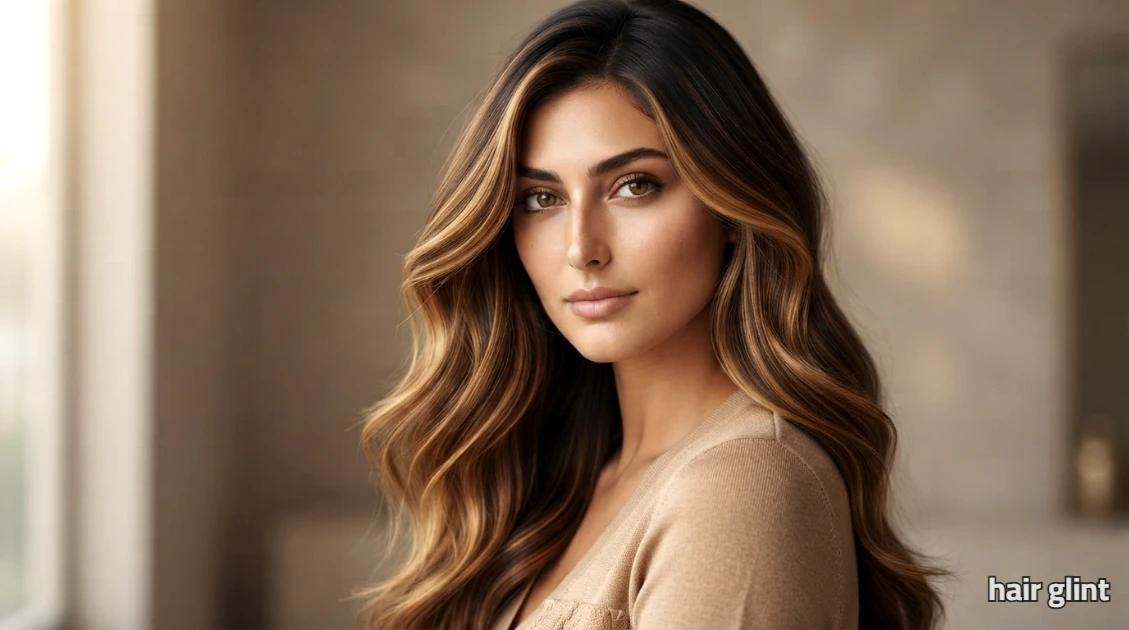
Honey highlights add golden warmth and brightness. Fine, softly blended pieces can create a natural-looking effect, while wider ribbons produce more visible contrast.
They may work well with warm or neutral brunette bases, depending on the result you want.
Beige Highlights
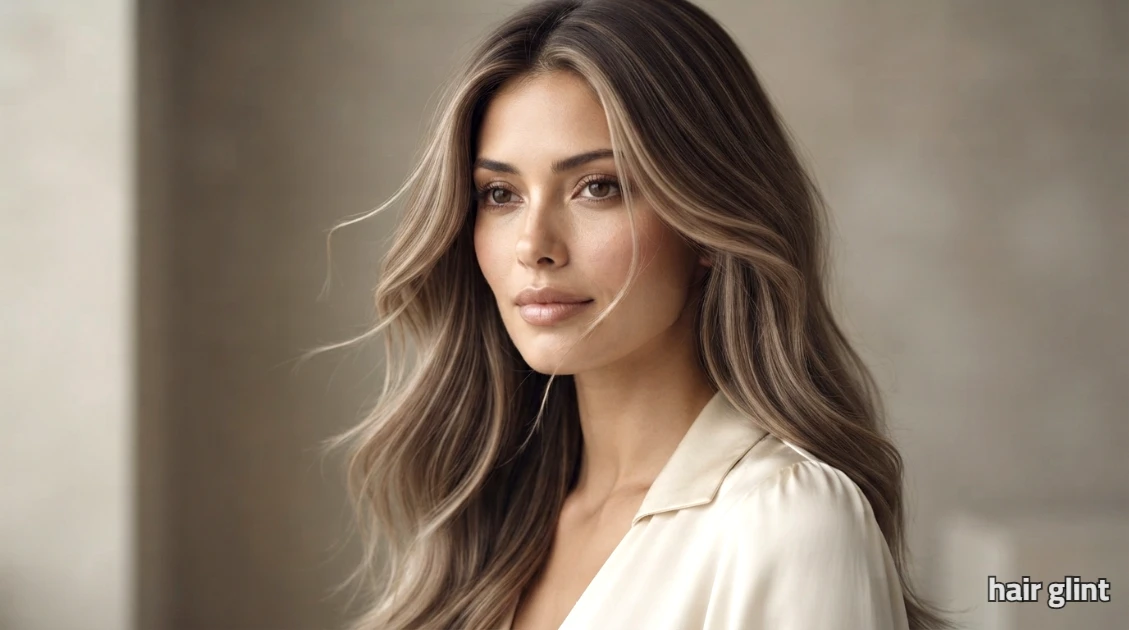
Beige highlights are useful if you prefer a muted finish rather than strong golden tones. They may be combined with neutral or cool brown bases to create a softer, balanced appearance.
Because beige shades vary, compare photographs in similar lighting before deciding.
Blonde Highlights
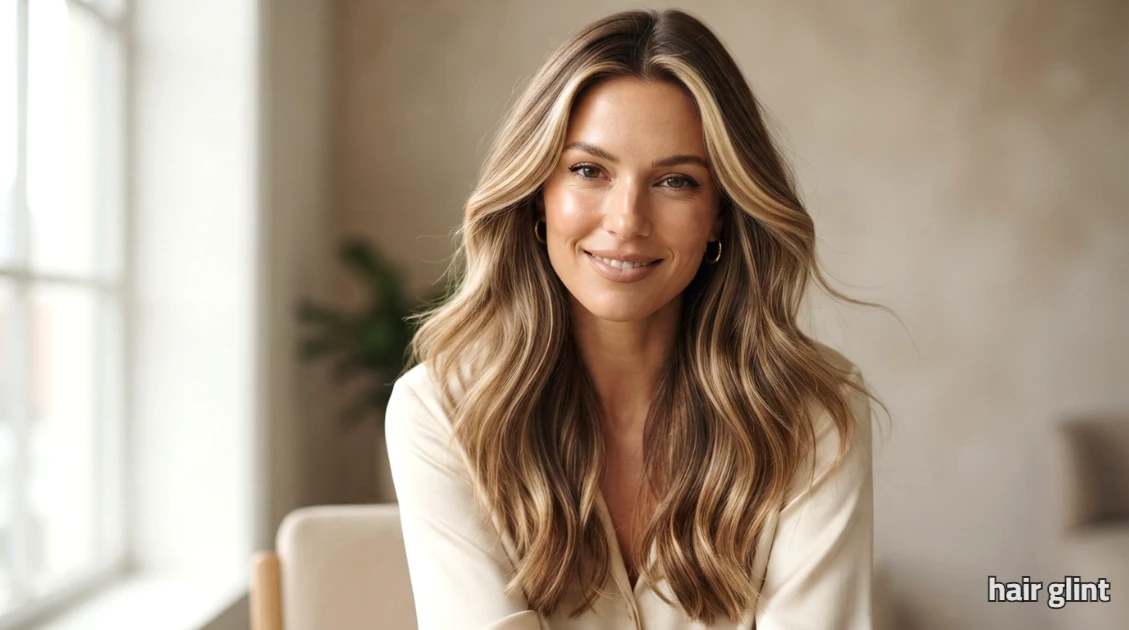
Blonde highlights create more contrast against a light brown base. The result can range from subtle bronde ribbons to noticeably lighter sections around the face.
However, the lighter the target shade, the more important it becomes to assess your starting color and hair condition. Achieving a substantial difference in lightness may require a lightening service.
Face-Framing Highlights
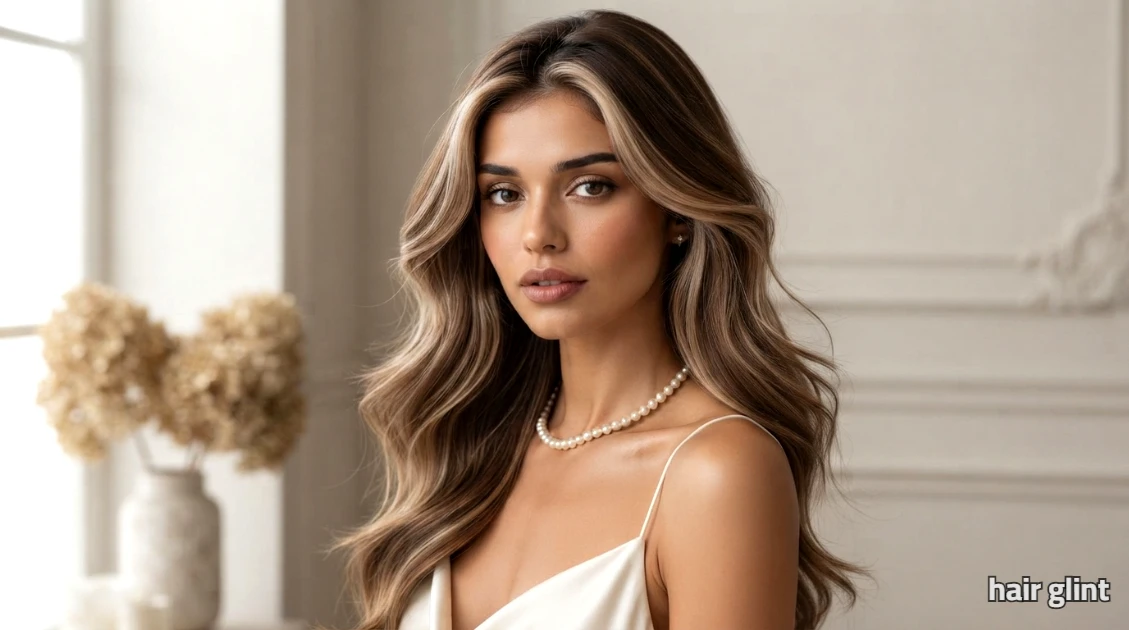
Face-framing highlights brighten the sections around the front of the hair. They can be subtle or bold and may be combined with balayage or traditional highlights.
Ask your stylist to adjust the placement and brightness to suit your haircut, preferred contrast, and overall color.
Light Brown Balayage and Ombré
Although balayage and ombré can both create a gradual transition between shades, they are not identical techniques.
Light Brown Balayage
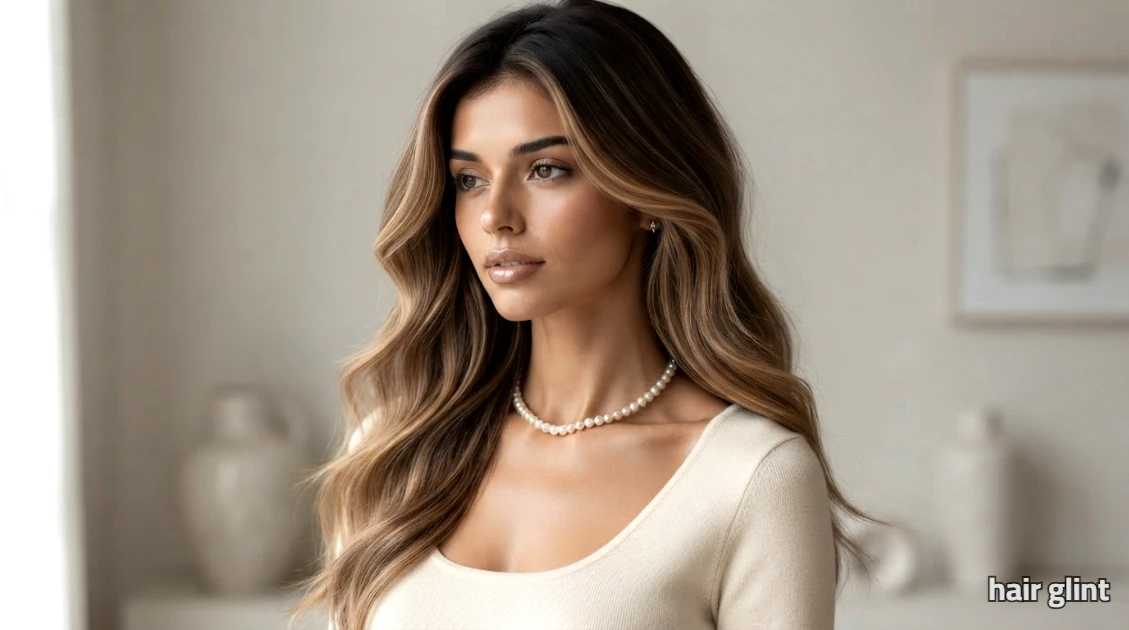
Balayage is a color-placement technique used to create blended, dimensional results. On a brown base, lighter pieces may be concentrated through the mid-lengths and ends.
A softer root transition can make regrowth less noticeable than a uniform color that changes visibly at the roots. Consequently, balayage may appeal to people who prefer a more blended look between appointments.
However, balayage does not automatically mean bleach-free coloring. Achieving lighter pieces may require a lightener, depending on the starting color and target result.
Light Brown Ombré
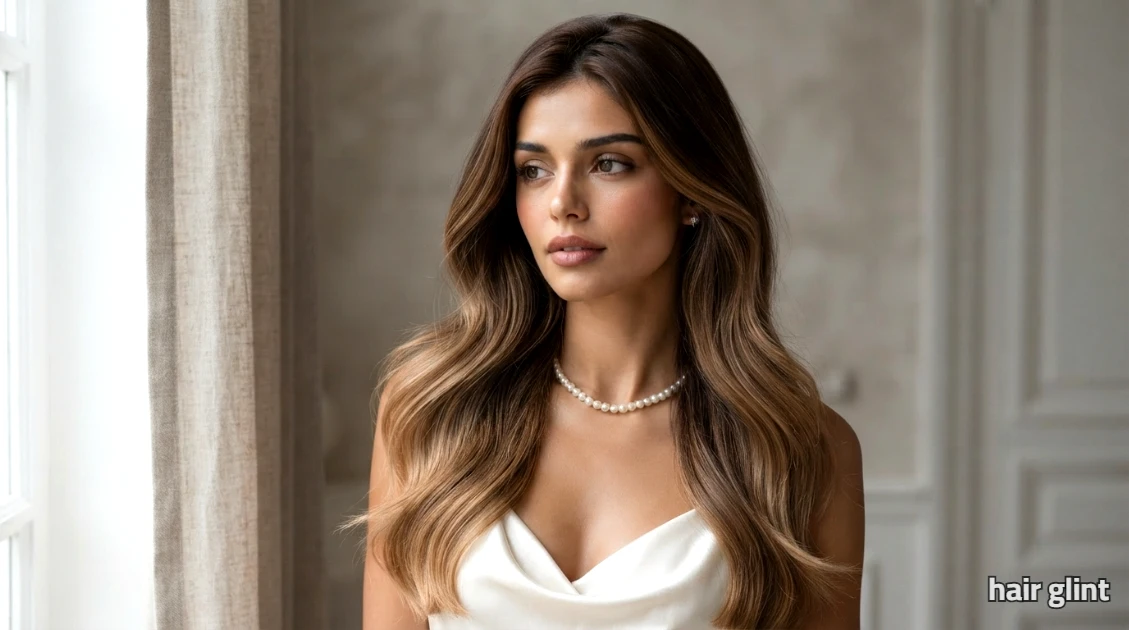
Ombré generally creates a more noticeable transition between darker roots and lighter lengths or ends.
It can be a useful choice if you want visible lightness away from the roots. However, lighter ends may need extra care if they become dry or lose their desired tone.
Reverse Balayage
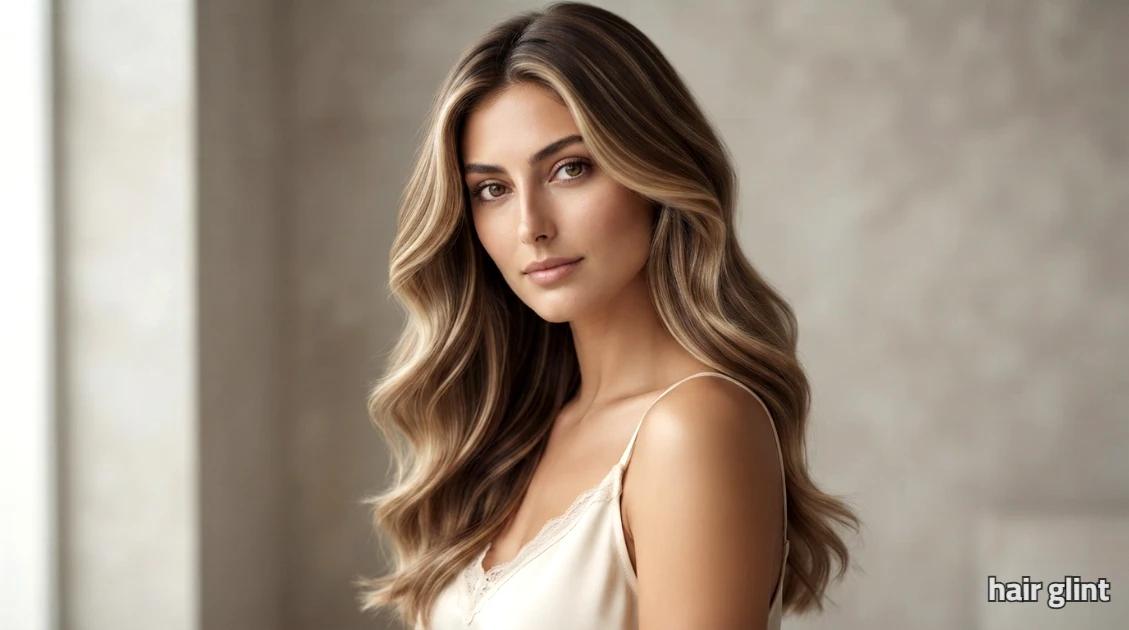
Reverse balayage typically introduces darker pieces into lighter hair to restore depth and dimension.
It may be useful if you are transitioning from blonde highlights toward a deeper brunette appearance. The exact technique depends on the existing color and the desired result.
Highlights vs. Balayage vs. Ombré
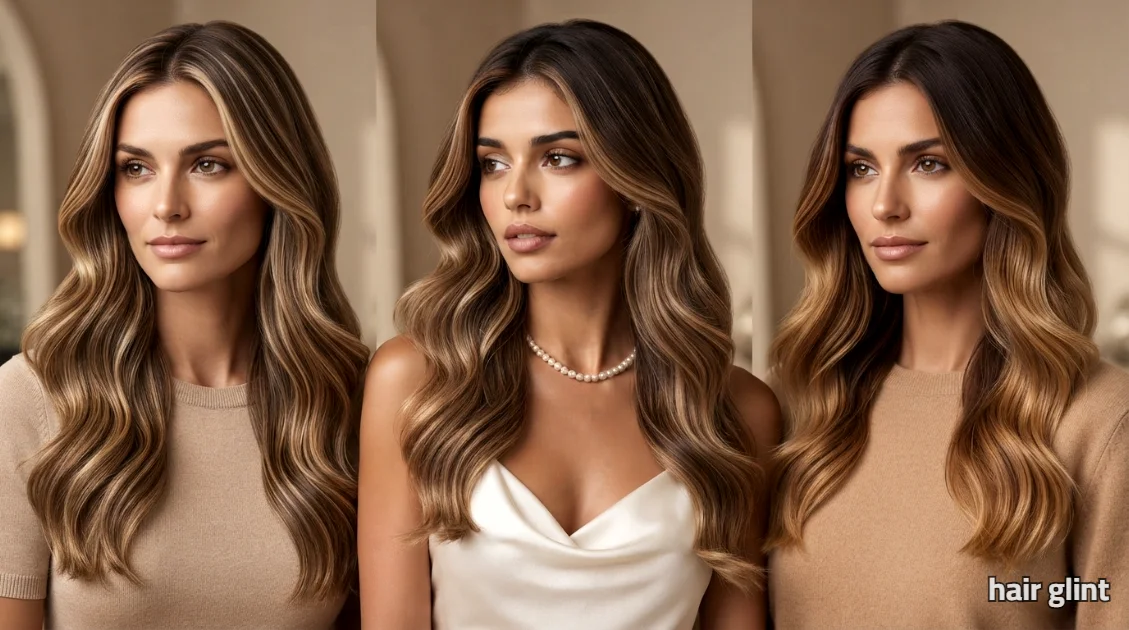
| Technique | Main characteristic | Consider it if you want |
|---|---|---|
| Traditional highlights | Individual lighter sections | More defined or evenly distributed highlights |
| Balayage | Blended, strategically placed color | Soft dimension and a gradual-looking transition |
| Ombré | A more visible dark-to-light gradient | Lighter ends with deeper roots |
| Face-framing highlights | Lighter sections near the front | Brightness around the face |
| Lowlights | Darker sections among lighter hair | Added depth and contrast |
| Reverse balayage | Darker pieces placed into lighter hair | A transition toward a deeper brunette look |
Ultimately, the best technique depends on your starting color, target shade, hair condition, and how frequently you want salon maintenance.
How to Choose Light Brown Hair Color for Your Skin Undertone
Your skin undertone can help guide your choice, but it should not be treated as a strict rule. Personal preference, natural hair color, eye color, and the amount of contrast you enjoy also matter.
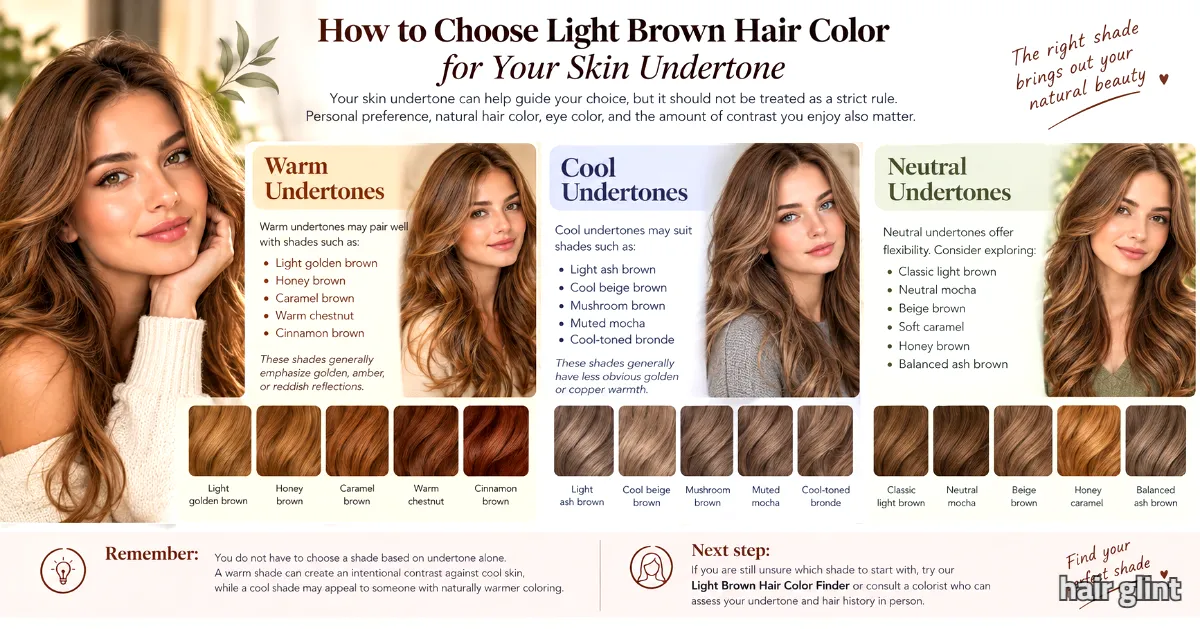
Warm Undertones
Warm undertones may pair well with shades such as:
- Light golden brown
- Honey brown
- Caramel brown
- Warm chestnut
- Cinnamon brown
These shades generally emphasize golden, amber, or reddish reflections. Nevertheless, you can still choose a cooler color if you prefer a contrasting look.
Cool Undertones
Cool undertones may suit shades such as:
- Light ash brown
- Cool beige brown
- Mushroom brown
- Muted mocha
- Cool-toned bronde
These shades generally have less obvious golden or copper warmth. However, your personal style matters more than following a strict color rule.
Neutral Undertones
Neutral undertones offer flexibility. Consider exploring:
- Classic light brown
- Neutral mocha
- Beige brown
- Soft caramel
- Honey brown
- Balanced ash brown
You do not have to choose a shade based on undertone alone. A warm shade can create an intentional contrast against cool skin, while a cool shade may appeal to someone with naturally warmer coloring.
What You Can Achieve From Your Current Hair Color
Your starting color is one of the most important factors in determining your result. Therefore, consider your natural color and previous treatments before purchasing a dye.
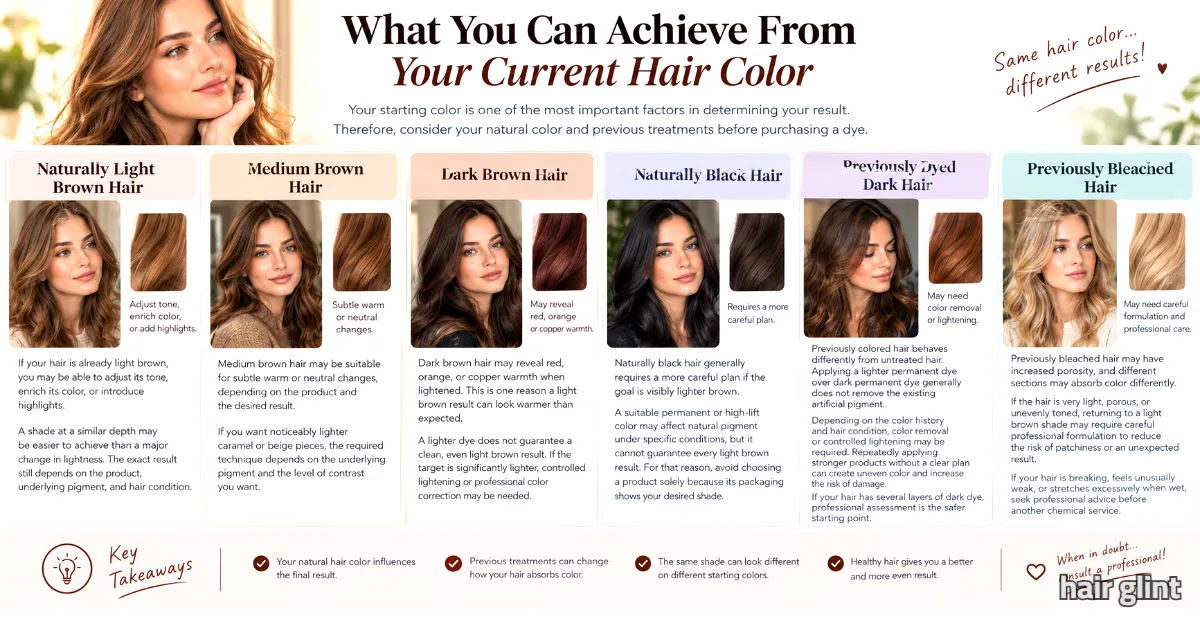
Naturally Light Brown Hair
If your hair is already light brown, you may be able to adjust its tone, enrich its color, or introduce highlights.
A shade at a similar depth may be easier to achieve than a major change in lightness. The exact result still depends on the product, underlying pigment, and hair condition.
Medium Brown Hair
Medium brown hair may be suitable for subtle warm or neutral changes, depending on the product and the desired result.
If you want noticeably lighter caramel or beige pieces, the required technique depends on the underlying pigment and the level of contrast you want.
Dark Brown Hair
Dark brown hair may reveal red, orange, or copper warmth when lightened. This is one reason a light brown result can look warmer than expected.
A lighter dye does not guarantee a clean, even light brown result. If the target is significantly lighter, controlled lightening or professional color correction may be needed.
Naturally Black Hair
Naturally black hair generally requires a more careful plan if the goal is visibly lighter brown.
A suitable permanent or high-lift color may affect natural pigment under specific conditions, but it cannot guarantee every light brown result. For that reason, avoid choosing a product solely because its packaging shows your desired shade.
Previously Dyed Dark Hair
Previously colored hair behaves differently from untreated hair. Applying a lighter permanent dye over dark permanent dye generally does not remove the existing artificial pigment.
Depending on the color history and hair condition, color removal or controlled lightening may be required. Repeatedly applying stronger products without a clear plan can create uneven color and increase the risk of damage.
If your hair has several layers of dark dye, professional assessment is the safer starting point.
Previously Bleached Hair
Previously bleached hair may have increased porosity, and different sections may absorb color differently.
If the hair is very light, porous, or unevenly toned, returning to a light brown shade may require careful professional formulation to reduce the risk of patchiness or an unexpected result.
If your hair is breaking, feels unusually weak, or stretches excessively when wet, seek professional advice before another chemical service.
Can You Get Light Brown Hair Color Without Bleach?
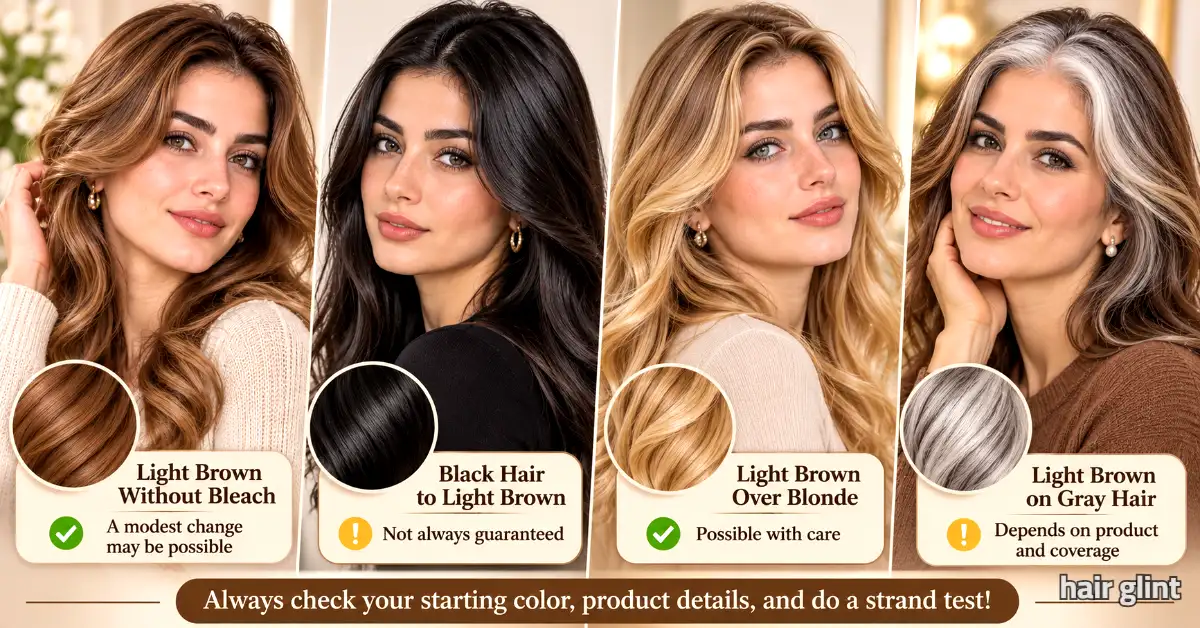
Sometimes, but the result depends on your starting shade, hair history, product formulation, and desired level of lightness.
If your natural hair is already relatively light, a suitable permanent color may achieve a modest change without a separate bleaching step. However, very dark natural hair may not reach the same result as a lighter starting shade.
Previously colored hair presents a different challenge because a lighter dye generally cannot lift existing permanent artificial pigment in the same way it may affect untreated hair.
When Is a No-Bleach Approach More Realistic?
A no-bleach approach may be more realistic when:
- Your natural hair is already close to the target shade.
- You want a modest change rather than a dramatic transformation.
- You want to adjust the tone rather than significantly increase lightness.
- Your hair has not been repeatedly colored with dark permanent dye.
- The selected product is suitable for your starting color.
Even in these circumstances, the outcome is not guaranteed. Always compare the manufacturer’s shade chart with your current hair and perform the required tests.
Can You Dye Black Hair Light Brown Without Bleach?
The answer depends on whether your hair is naturally black or artificially colored black, as well as the product used.
A suitable product may lighten some untreated hair under specific conditions, but a noticeably lighter, even brown result is not guaranteed.
Artificial black dye is more complicated. Applying light brown dye over it usually does not remove the existing dark pigment.
If you want a substantial change, consult a qualified colorist to assess whether lightening is necessary and how to reduce the risk of damage.
Can You Put Light Brown Dye Over Blonde Hair?
Light brown dye can be applied to some blonde hair, but the result depends on the existing tone, porosity, and formulation.
Very light or previously bleached hair may need a carefully planned color application to avoid an uneven or unexpectedly cool, warm, or muddy result.
For a significant change from blonde to brunette, professional advice is recommended. In particular, do not assume that applying a brown shade directly will always create the same color shown on the packaging.
Does Light Brown Hair Dye Cover Gray Hair?
Gray coverage depends on the product, the percentage and distribution of gray hair, and the chosen formulation.
Some permanent colors are designed for gray coverage, while other products provide blending or a more translucent finish. Therefore, check the manufacturer’s coverage claims and instructions rather than assuming every light brown dye provides complete coverage.
If your hair has a high percentage of gray, ask a colorist whether the selected shade and formula are suitable for the result you want.
How to Dye Your Hair Light Brown at Home
Home coloring may be suitable for some modest changes. However, it is important to understand your starting color and follow the specific product instructions carefully.
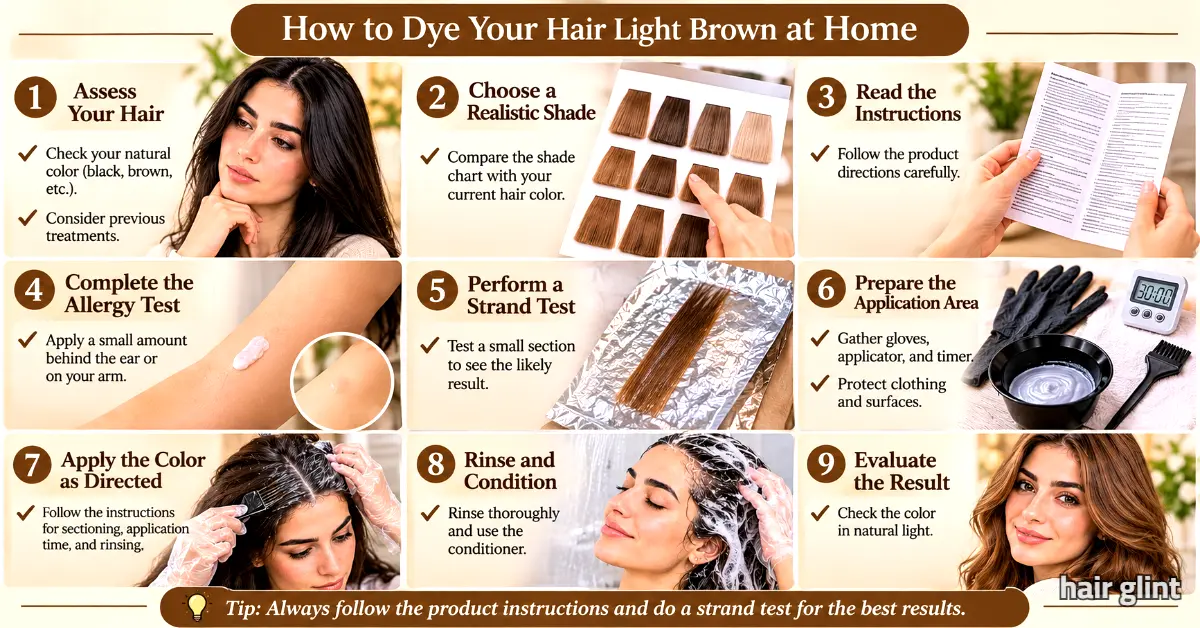
Step 1: Assess Your Hair
Identify whether your hair is naturally black, dark brown, medium brown, light brown, blonde, gray, or previously dyed.
Make a note of previous chemical treatments, especially permanent color, bleach, relaxers, or other services that may affect the result.
Step 2: Choose a Realistic Shade
Compare the product’s shade chart with your current hair color.
Do not assume the result will match the model on the box. If your starting color differs significantly from the example, the outcome may also differ.
Step 3: Read the Product Instructions
Check whether the product is suitable for your starting color and hair history.
Use only the developer and mixing instructions specified by the manufacturer. Do not improvise mixing ratios or combine unrelated products.
Step 4: Complete the Required Allergy Test
Follow the manufacturer’s allergy or sensitivity testing instructions before every application, even if you have used hair dye before.
Do not use the product if the test causes a reaction. A negative test does not eliminate all risk of an allergic reaction.
Step 5: Perform a Strand Test
A strand test helps you assess the likely color result and how your hair responds to the product.
Follow the product instructions, test a small, inconspicuous section, and assess the result in good lighting.
Remember that a strand test evaluates color performance; it does not replace an allergy test.
Step 6: Prepare the Application Area
Gather the items specified in the instructions, such as gloves, an applicator, and a timer.
Protect clothing and nearby surfaces. Also, follow the product’s directions regarding whether the color should be applied to dry or damp hair.
Step 7: Apply the Color as Directed
Follow the manufacturer’s instructions for sectioning, application order, processing time, and rinsing.
Do not extend the processing time in an attempt to make the hair lighter. In addition, do not mix different dye products unless the manufacturer explicitly provides compatible instructions.
Step 8: Rinse and Condition
Rinse the product as directed and use the recommended conditioner or after-color treatment if supplied.
Avoid adding extra chemical treatments immediately afterward unless the product instructions or a qualified professional indicate that it is appropriate.
Step 9: Evaluate the Result
Check the color under natural lighting once the hair is dry.
If the result is too warm, too dark, patchy, or noticeably different from the target, do not immediately apply another permanent dye or lightener. Assess the situation before attempting correction.
Bremod Light Brown 5.0: What to Know Before Choosing It
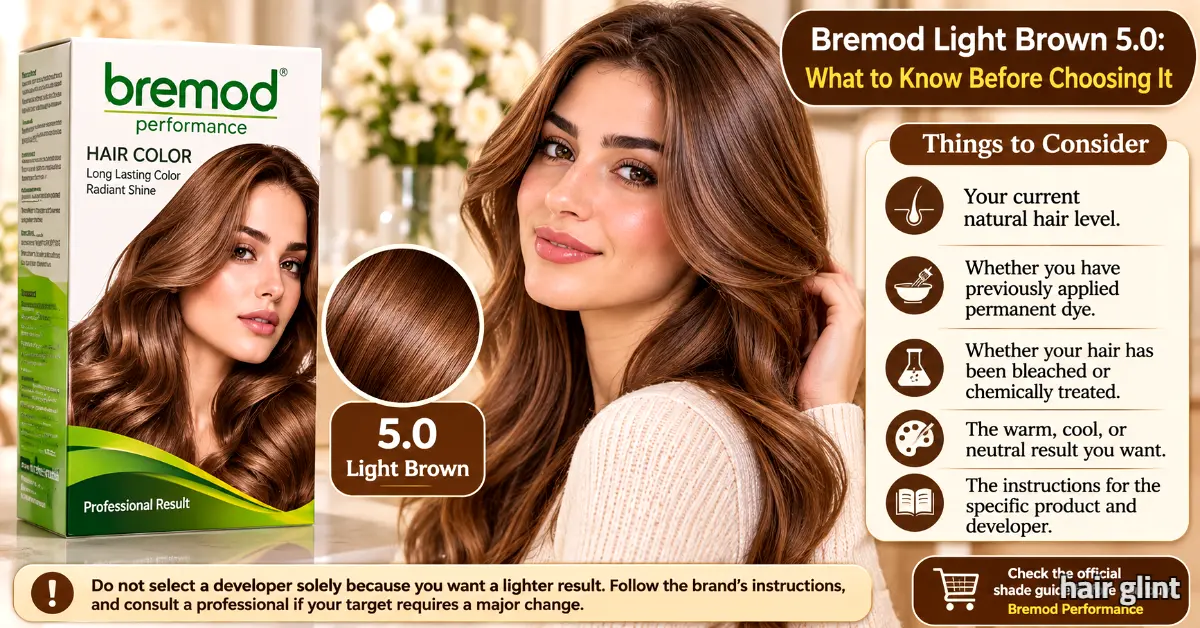
Bremod’s hair-color guide lists a shade called Light Brown 5.0. You can consult the official Bremod Performance hair color guide to review its listed shades and general color guidance.
The shade name and code are useful when comparing products, but they do not guarantee an identical result on every head of hair.
Before choosing Bremod Light Brown 5.0, consider:
- Your current natural hair level.
- Whether you have previously applied permanent dye.
- Whether your hair has been bleached or chemically treated.
- The warm, cool, or neutral result you want.
- The instructions for the specific product and developer.
Do not select a developer solely because you want a lighter result. Follow the brand’s instructions, and consult a professional if your target requires a major change or your hair history is complicated.
Prices and availability vary by retailer — verify details before purchasing.
Shopping for this shade? Shop Bremod Light Brown 5.0 or check the official shade guide before you buy.
Light Brown vs. Dark Blonde vs. Bronde
These color families can appear similar in photographs, especially under bright lighting. However, they have different general characteristics.
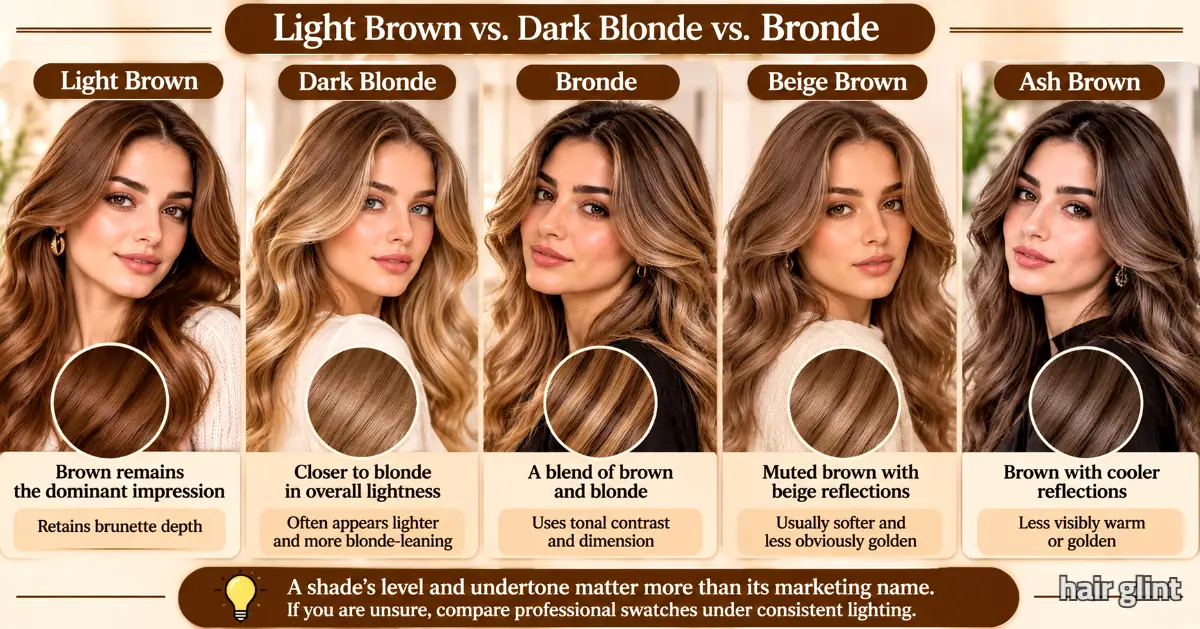
| Color family | General appearance | Main distinction |
|---|---|---|
| Light brown | Brown remains the dominant impression | Retains brunette depth |
| Dark blonde | Closer to blonde in overall lightness | Often appears lighter and more blonde-leaning |
| Bronde | A blend of brown and blonde | Uses tonal contrast and dimension |
| Beige brown | Muted brown with beige reflections | Usually softer and less obviously golden |
| Ash brown | Brown with cooler reflections | Less visibly warm or golden |
A shade’s level and undertone matter more than its marketing name. If you are unsure, compare professional swatches under consistent lighting.
Light Brown Hair Color Ideas by Hair Type
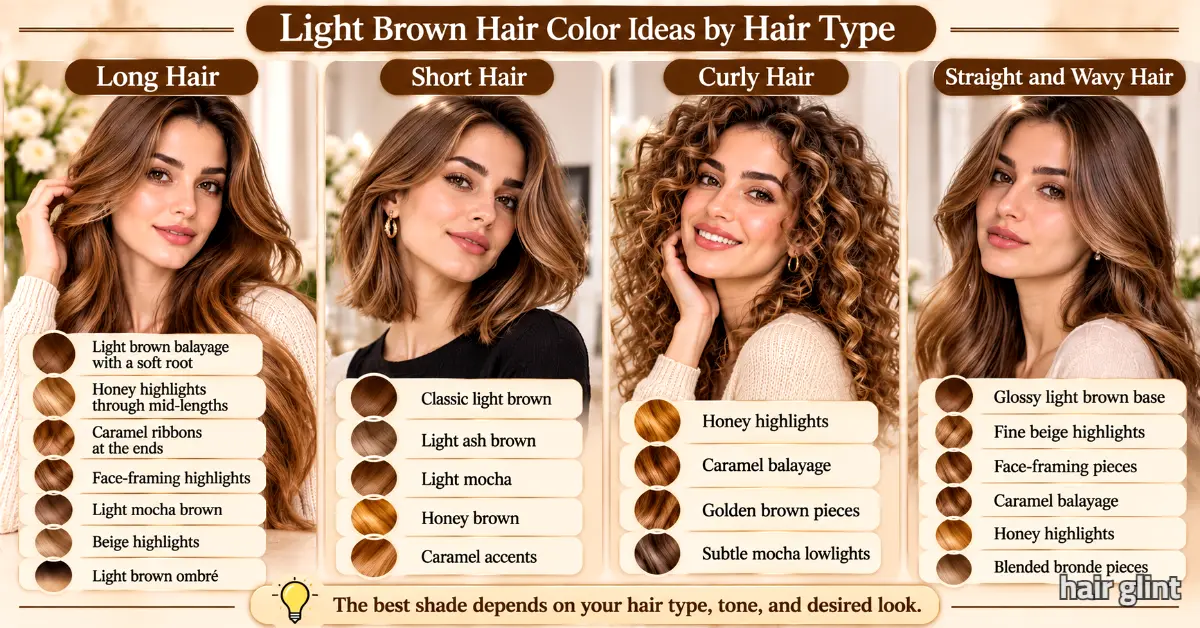
Long Hair
Long hair offers space to show gradual transitions and several tones. As a result, both all-over color and dimensional techniques can work well.
Consider these options:
- Light brown balayage with a softly blended root.
- Honey highlights through the mid-lengths.
- Caramel ribbons concentrated toward the ends.
- Face-framing highlights for brightness around the front.
- Light mocha brown for an all-over brunette finish.
- Beige highlights for a muted, dimensional effect.
- Light brown ombré for a more visible root-to-end transition.
If you prefer less frequent root maintenance, discuss a blended-root or balayage approach with your colorist. The best placement depends on your haircut, starting color, and preferred contrast.
Short Hair
Short hair can look polished with a single light brown shade or a few carefully placed highlights.
Classic light brown, light ash brown, light mocha, honey brown, and caramel accents are all options to explore.
For shorter cuts, highlight placement matters because the shape of the haircut may make lighter pieces more visible around the crown, fringe, or front sections.
Bring reference photos showing both the color and haircut you want. This helps your stylist understand whether you prefer a uniform finish or more noticeable dimension.
Curly Hair
Curly hair naturally creates areas of light and shadow, making it suitable for dimensional color.
Honey highlights, caramel balayage, golden brown pieces, and subtle mocha lowlights can create contrast while retaining a brunette base.
Color placement should take the curl pattern into account. Ask your stylist to consider how your curls sit when dry so the lighter sections appear where you want them.
If your curls are already dry or chemically damaged, prioritize hair condition before adding more lightening. A beautiful color result should not come at the expense of avoidable damage.
Straight and Wavy Hair
On straight hair, differences in tone may be more visible because the surface reflects light more uniformly.
A glossy light brown base, fine beige highlights, or subtle face-framing pieces can create a clean, defined appearance.
Wavy hair naturally creates more variation in light and shadow. Therefore, caramel balayage, honey highlights, and blended bronde pieces may emphasize the movement of the waves.
Neither texture requires one particular shade. The best choice depends on the contrast, tone, and finish you prefer.
How to Maintain Light Brown Hair Color
The right maintenance routine depends on whether your hair is colored all over, highlighted, or lightened through balayage. Nevertheless, a few habits can help maintain the appearance of your color.
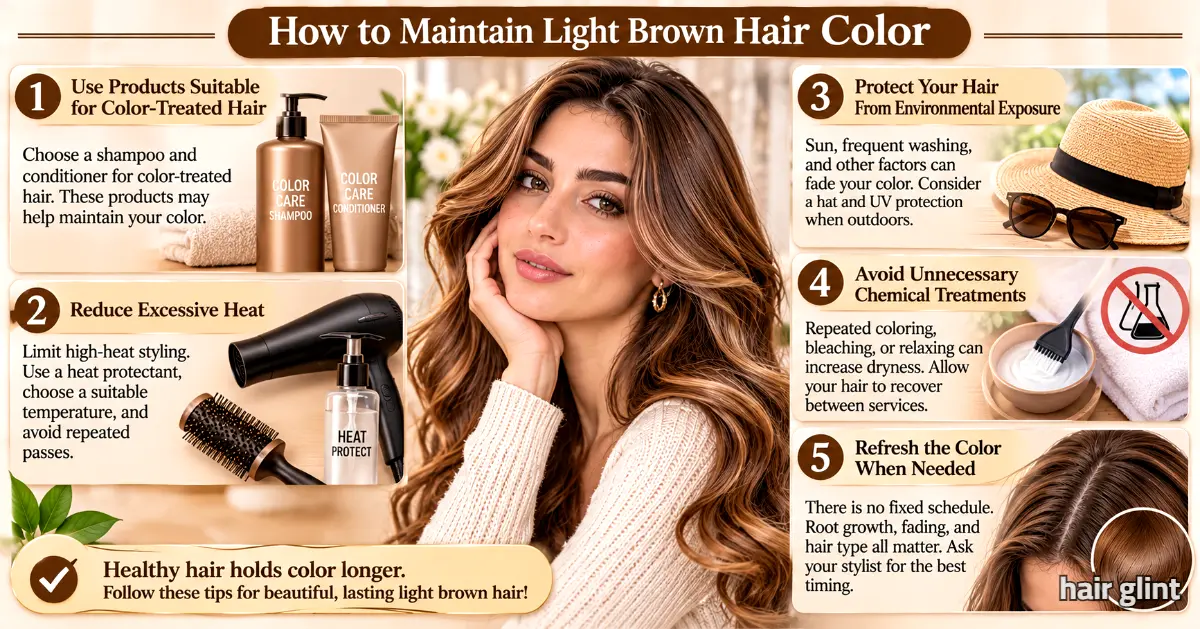
Use Products Suitable for Color-Treated Hair
Choose a shampoo and conditioner appropriate for your scalp and hair condition. Products labeled for color-treated hair may help maintain the appearance of the color, although no product can prevent all fading.
If your scalp is sensitive or your hair is particularly dry, choose products based on those needs rather than relying on marketing labels alone.
Reduce Excessive Heat
Frequent high-heat styling can contribute to dryness and make damaged hair look less smooth.
Use a heat protectant when appropriate, choose a suitable temperature, and avoid unnecessary repeated passes with hot tools.
Protect Your Hair From Environmental Exposure
Sun exposure, frequent washing, and other environmental factors can affect the appearance of colored hair.
When spending extended periods outdoors, consider protective measures such as a hat. Also, follow care advice suited to your hair type and the coloring service you received.
Avoid Unnecessary Chemical Treatments
Repeated coloring, bleaching, relaxing, or other chemical services can increase the risk of dryness and breakage.
Allow your hair to recover between services when necessary. If you notice unusual breakage or a major change in texture, seek professional advice before another chemical treatment.
Refresh the Color When Needed
There is no universal schedule for refreshing light brown hair color. Root growth, fading, hair condition, and whether you have all-over color or highlights all influence timing.
A blended-root technique may make regrowth less noticeable. Meanwhile, highlights may need different maintenance from an all-over color.
Ask your stylist to recommend a schedule based on your hair rather than following a fixed timetable.
How to Fix Common Light Brown Hair Color Problems
If your color looks different from what you expected, identify the likely cause before applying another product.
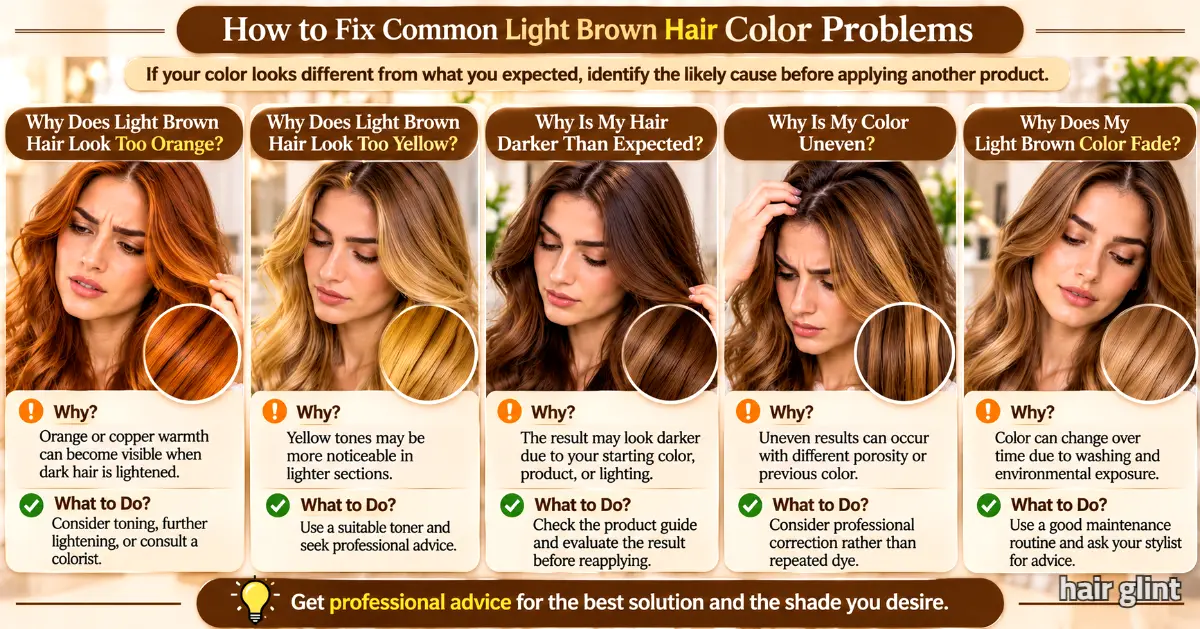
Why Does Light Brown Hair Look Too Orange?
Orange or copper warmth can become visible when dark hair is lightened because underlying pigment is exposed.
The correct approach depends on your current color level, the amount of unwanted warmth, and the target shade. Do not automatically apply a strong ash color without assessing the existing result.
A colorist can determine whether toning, further controlled lightening, or another correction is appropriate.
Why Does Light Brown Hair Look Too Yellow?
Yellow tones may be more noticeable in lighter sections or previously lightened hair.
However, the solution depends on the overall color and the desired finish. A toner that works for one starting shade may not produce the same result on another.
Compare the current shade with your target and seek professional advice if you are uncertain about the corrective product.
Why Is My Hair Darker Than Expected?
The result may look darker because of the starting color, product formula, application, or the way the shade appears under different lighting.
Before applying another product, check the manufacturer’s guidance and allow yourself to evaluate the dry hair in consistent lighting. Repeated coloring without a plan can create additional buildup or damage.
Why Is My Color Uneven?
Uneven results can occur when the hair has different levels of porosity, previous color buildup, or different starting shades across the head.
Previously bleached lengths and naturally darker roots, for example, may respond differently to the same formula.
If the color is noticeably patchy, professional correction is generally more sensible than repeatedly applying dye over the entire head.
Why Does My Light Brown Color Fade?
Color can change over time because of washing, environmental exposure, and the condition of the hair.
A suitable maintenance routine may help preserve the appearance of the shade. However, fading is not always preventable, and warm or cool reflections may change at different rates.
If you want a particular tone to remain visible, ask your stylist about appropriate maintenance options.
Hair Dye Safety: What to Know Before Coloring
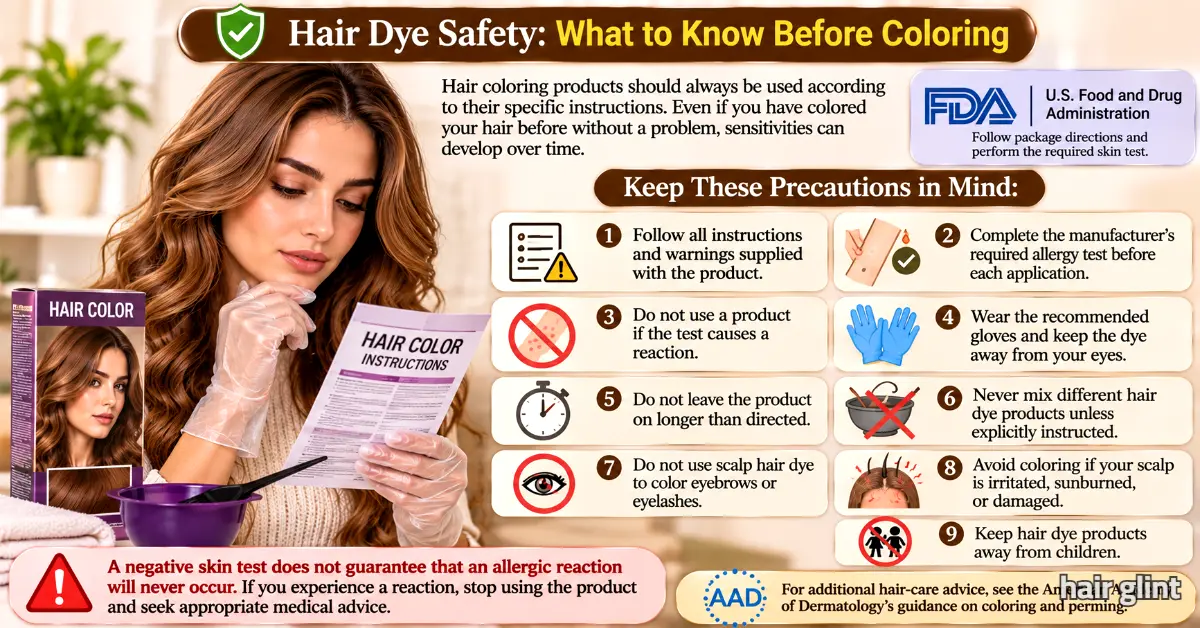
Hair coloring products should always be used according to their specific instructions. Even if you have colored your hair before without a problem, sensitivities can develop over time.
The U.S. Food and Drug Administration provides hair dye safety guidance, including the importance of following package directions and performing the required skin test before each use.
Keep these precautions in mind:
- Follow all instructions and warnings supplied with the product.
- Complete the manufacturer’s required allergy test before each application.
- Do not use a product if the test causes a reaction.
- Wear the recommended gloves and keep the dye away from your eyes.
- Do not leave the product on longer than directed.
- Never mix different hair dye products unless the manufacturer explicitly instructs you to do so.
- Do not use scalp hair dye to color eyebrows or eyelashes.
- Avoid coloring if your scalp is irritated, sunburned, or damaged.
- Keep hair dye products away from children.
A negative skin test does not guarantee that an allergic reaction will never occur. If you experience a reaction, stop using the product and seek appropriate medical advice.
For additional hair-care advice, the American Academy of Dermatology’s guidance on coloring and perming discusses ways to reduce avoidable damage and follow product testing instructions.
Quick Checklist: How to Choose the Right Light Brown Hair Color
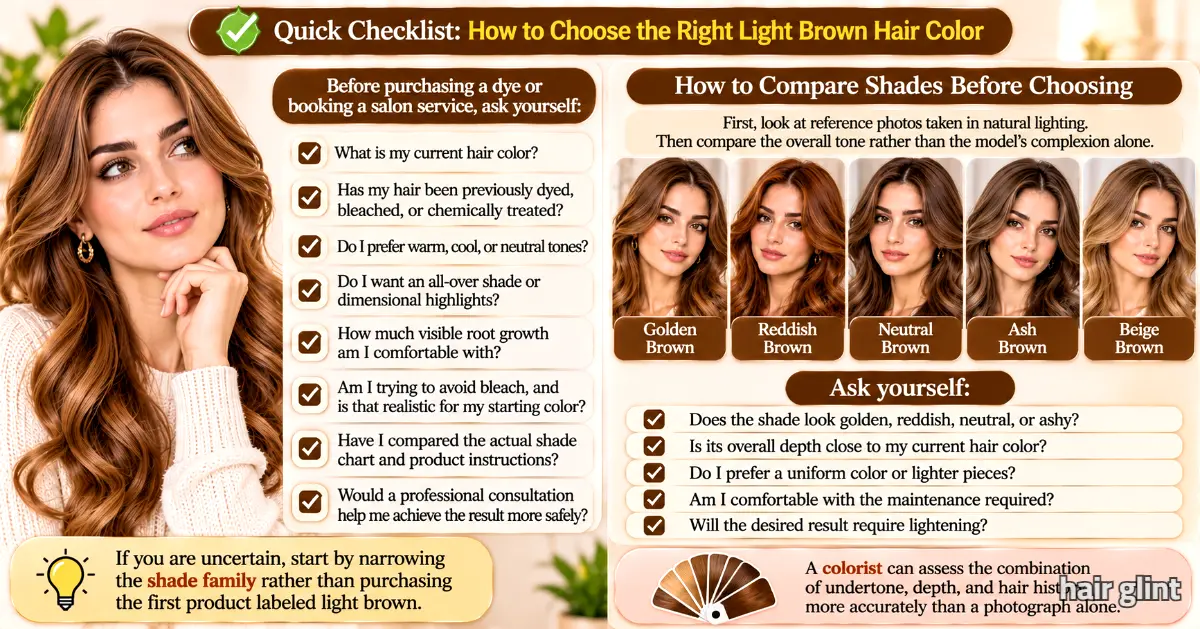
Before purchasing a dye or booking a salon service, ask yourself:
- What is my current hair color?
- Has my hair been previously dyed, bleached, or chemically treated?
- Do I prefer warm, cool, or neutral tones?
- Do I want an all-over shade or dimensional highlights?
- How much visible root growth am I comfortable with?
- Am I trying to avoid bleach, and is that realistic for my starting color?
- Have I compared the actual shade chart and product instructions?
- Would a professional consultation help me achieve the result more safely?
If you are uncertain, start by narrowing the shade family rather than purchasing the first product labeled light brown.
How to Compare Shades Before Choosing
First, look at reference photos taken in natural lighting. Then compare the overall tone rather than the model’s complexion alone.
Ask yourself:
- Does the shade look golden, reddish, neutral, or ashy?
- Is its overall depth close to my current hair color?
- Do I prefer a uniform color or lighter pieces?
- Am I comfortable with the maintenance required?
- Will the desired result require lightening?
A colorist can assess the combination of undertone, depth, and hair history more accurately than a photograph alone.
Frequently Asked Questions About Light Brown Hair Color
Final Thoughts
Light brown hair color offers versatile shades, from cool ash to warm honey and caramel. Choose a shade that complements your desired look, current hair color, and maintenance needs.
For best results, consider your hair history and consult a professional when making significant color changes, especially if you want to avoid bleach.
Explore more hair color inspiration: